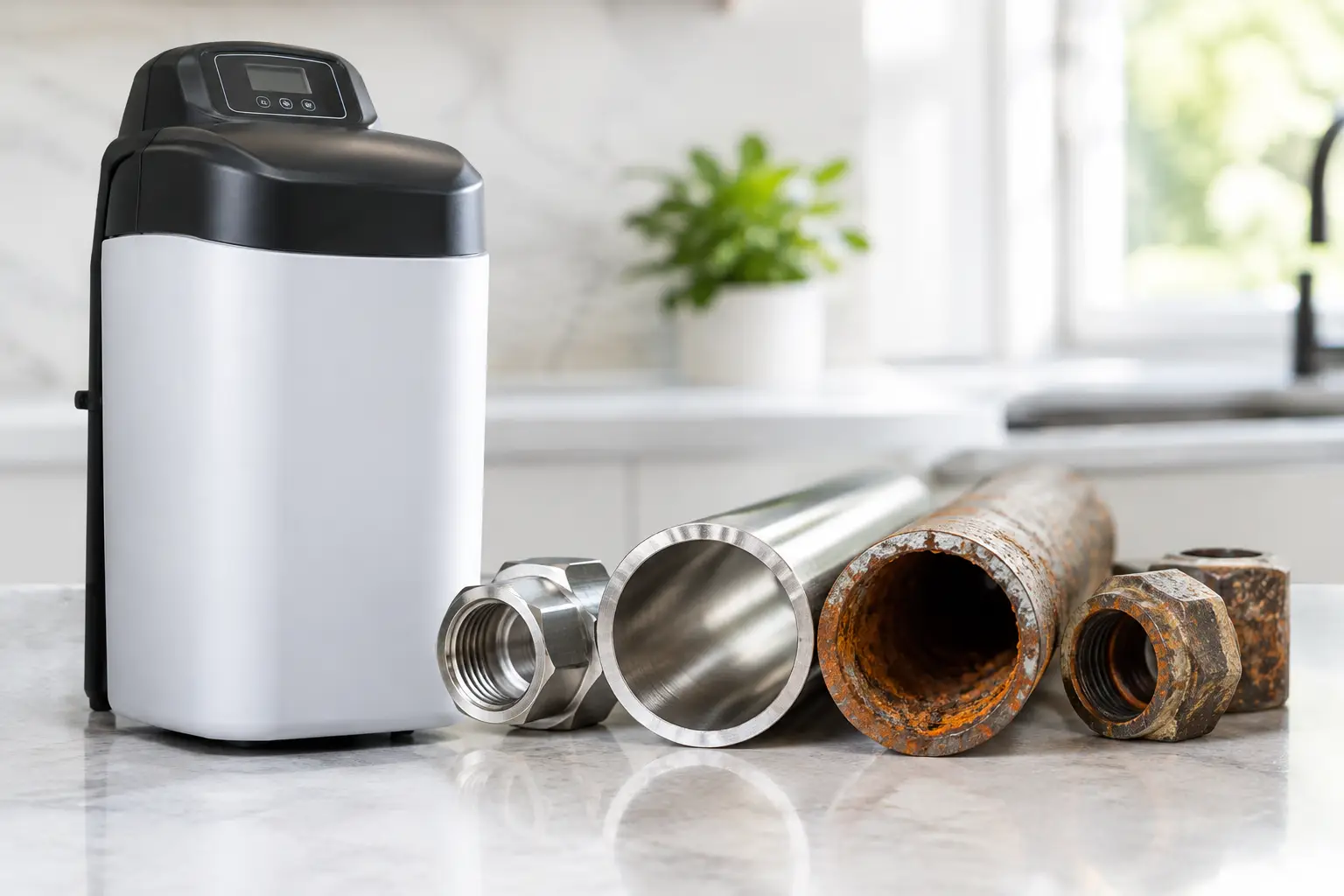
A spotless washdown should not create a corrosion problem. Yet many boat, RV, and vehicle owners ask: does soft water corrode metals? The short answer is no – properly softened water is not the cause of metal corrosion in normal use. In fact, using soft water for washdowns and cleaning helps prevent the mineral scale and hard-water spotting that can trap moisture, dull finishes, and add hours to maintenance.
The concern comes from a real but often misunderstood idea: water chemistry affects metal. It does. But water hardness is only one part of that chemistry, and removing calcium and magnesium is not the same as turning water into an aggressive, metal-stripping liquid.
Does Soft Water Corrode Metals in Marine Use?
Soft water created by an ion-exchange softener removes the calcium and magnesium minerals responsible for hard-water scale. In their place, the system releases a small amount of sodium. The water is still water with dissolved minerals in it. It is not distilled water, deionized water, or highly purified laboratory water.
That distinction matters. Very low-mineral water, such as deionized water, can be more chemically aggressive under certain conditions because it seeks to dissolve minerals and reach equilibrium. A portable water softener does not produce that kind of water. It produces water that rinses cleanly, lets soap work better, and leaves far less mineral residue behind.
For owners washing a hull, topsides, stainless railings, windows, gelcoat, painted surfaces, or onboard equipment, softened water is generally a protective choice. It reduces the dried mineral deposits that hard water leaves on every surface. Those deposits are more than cosmetic. Scale can hold contaminants against metal and create hard-to-clean buildup around fittings, faucets, shower fixtures, and appliances.
On a boat, corrosion is far more likely to come from salt exposure, stagnant moisture, poor drainage, dissimilar metals, or neglected protective finishes than from a final rinse with soft water.
What Actually Causes Metal Corrosion?
Corrosion is an electrochemical process. Metal, water, oxygen, and conductive contaminants can combine to create conditions where a metal gradually breaks down. The speed and severity depend on the material and its environment.
Saltwater is a major concern because chlorides make water more conductive and can damage the protective oxide layer on metals such as stainless steel and aluminum. That is why salt spray, wet dock lines, unsealed fasteners, bilge moisture, and residue left after a washdown deserve attention.
Water may also be corrosive when it has low pH, low alkalinity, high chloride content, high dissolved solids, or certain industrial contaminants. Hot water, trapped moisture, and electrical current can make matters worse. None of these factors is solved simply by measuring hardness.
For boat owners, galvanic corrosion deserves special attention. It occurs when two unlike metals are electrically connected in an electrolyte, often seawater. A bronze fitting, aluminum component, stainless fastener, or underwater metal can be affected depending on the electrical path and protection in place. Soft wash water is not the root cause of that problem.
The same principle applies to RVs, vehicles, and aircraft. Road salt, coastal air, chemicals, damaged paint, wet debris, and poor drainage are much more likely to create corrosion trouble than softened rinse water.
Hard Water Creates Its Own Maintenance Problem
Hard water is not automatically safer for metal just because it contains calcium and magnesium. In some plumbing situations, mineral deposits can form a thin layer inside pipes. But that scale is not a reliable corrosion-control strategy, and it brings its own expensive problems.
On exterior surfaces, hard water dries into visible spots and chalky deposits. On a dark-colored hull, polished metal, windshield, or aircraft surface, those marks can quickly become a detailing issue. Repeated exposure can leave etched-looking residue, especially when minerals bake in the sun.
Hard-water scale also builds on fixtures, water heaters, showerheads, pumps, and other equipment that carries water. Scale restricts flow, reduces heat-transfer efficiency, and makes cleaning more difficult. It can collect around joints and crevices where moisture and contaminants remain longer than they should.
Soft water helps break that cycle. Soap rinses more freely, cleaning products work with less effort, and surfaces dry with fewer mineral deposits. That means less aggressive scrubbing and fewer harsh chemicals – both of which can wear on finishes over time.
Softened Water Is Not the Same as Saltwater
The word “salt” causes understandable confusion. Water softeners are commonly regenerated with salt, but the treated water coming out of the system is not saltwater. During regeneration, salt brine restores the resin media so it can continue exchanging hardness minerals. The brine is used during the recharge process, then rinsed away.
The finished softened water contains a modest sodium increase related to the original hardness level. It does not have anything close to the salt concentration of seawater. Comparing softened water to seawater is like comparing a pinch of salt in a large pot of water to an ocean tide.
That said, any wash system should be used correctly. Keep the brine used for regeneration separate from the fresh-water rinse process. Follow the unit’s recharge instructions, flush as directed, and use clean source water. A properly operated portable softener is designed to deliver soft rinse water, not brine.
When Water Chemistry Should Be Tested
If you see unexplained pitting, blue-green staining on copper, rusting that returns unusually fast, pinhole leaks, or recurring damage on plumbing components, do not assume soft water is the problem. Test the water and inspect the system.
A complete water evaluation can check pH, alkalinity, chlorides, dissolved solids, iron, copper, and other factors. For onboard systems, also consider whether the issue appears only after shore-water connection, only in hot-water lines, or only in a certain marina. Those details can point to the real source.
For example, low-pH water may contribute to copper corrosion. High chlorides can be tough on stainless steel. Stray electrical current can accelerate corrosion around a vessel or dock. A plumbing professional or qualified marine technician can help isolate the cause when damage is active or recurring.
Best Practices for Protecting Metal Surfaces
Soft water works best as part of a disciplined washdown and maintenance routine. Rinse salt, dirt, and contaminants off promptly, especially after running offshore or traveling on salted roads. Do not let wash water pool around hardware, seams, or electrical connections.
After washing, dry sensitive metal surfaces where practical. This is particularly useful for polished stainless, aluminum trim, hardware, and areas with tight crevices. Check fasteners, fittings, rails, and drain paths regularly so water cannot sit where it does not belong.
For boats, maintain bonding systems, sacrificial anodes, and shore-power connections according to the vessel manufacturer’s recommendations. Keep compatible metals properly isolated where needed, and address damaged coatings early. Softened water can make cleaning easier, but it cannot replace sound corrosion prevention practices.
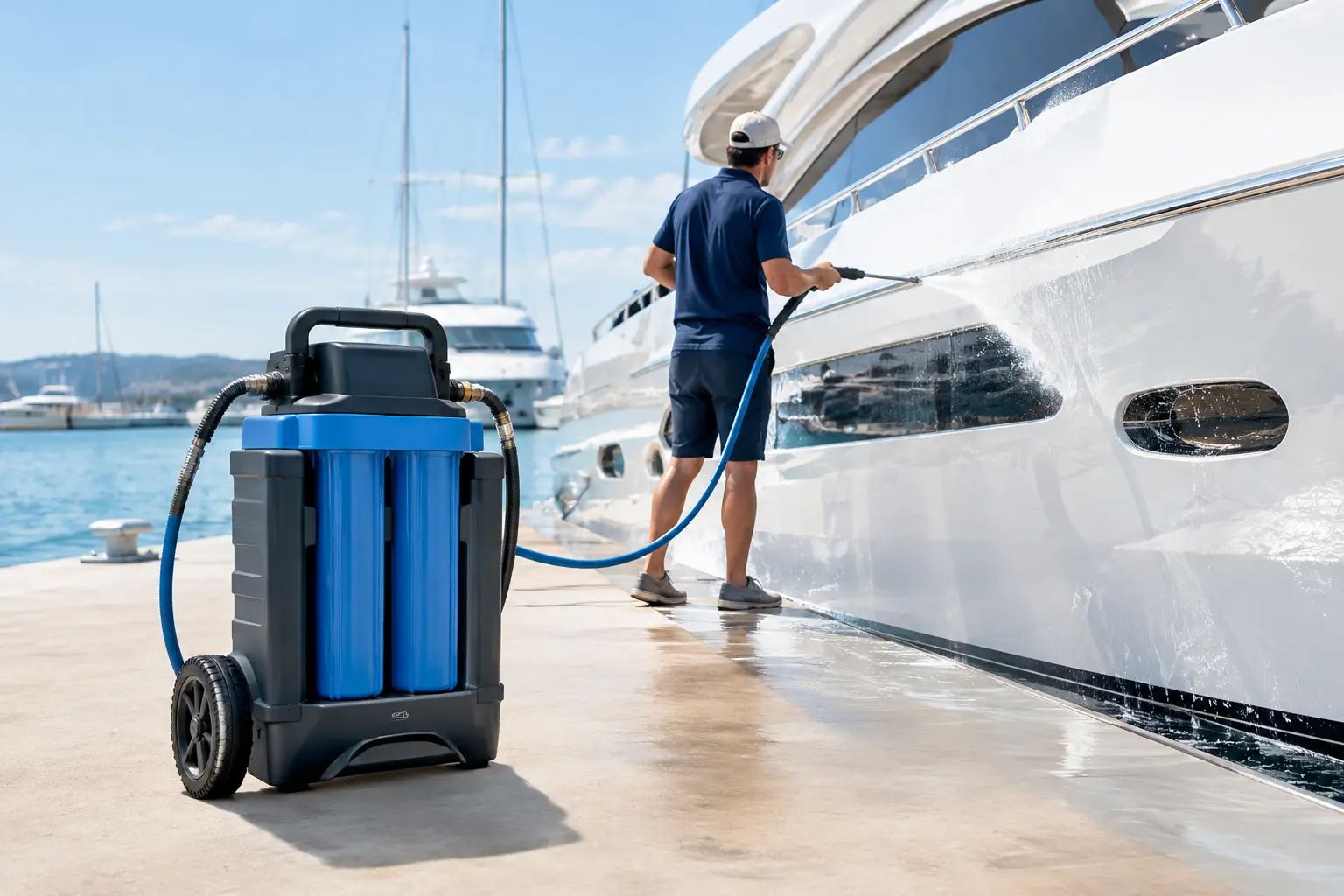
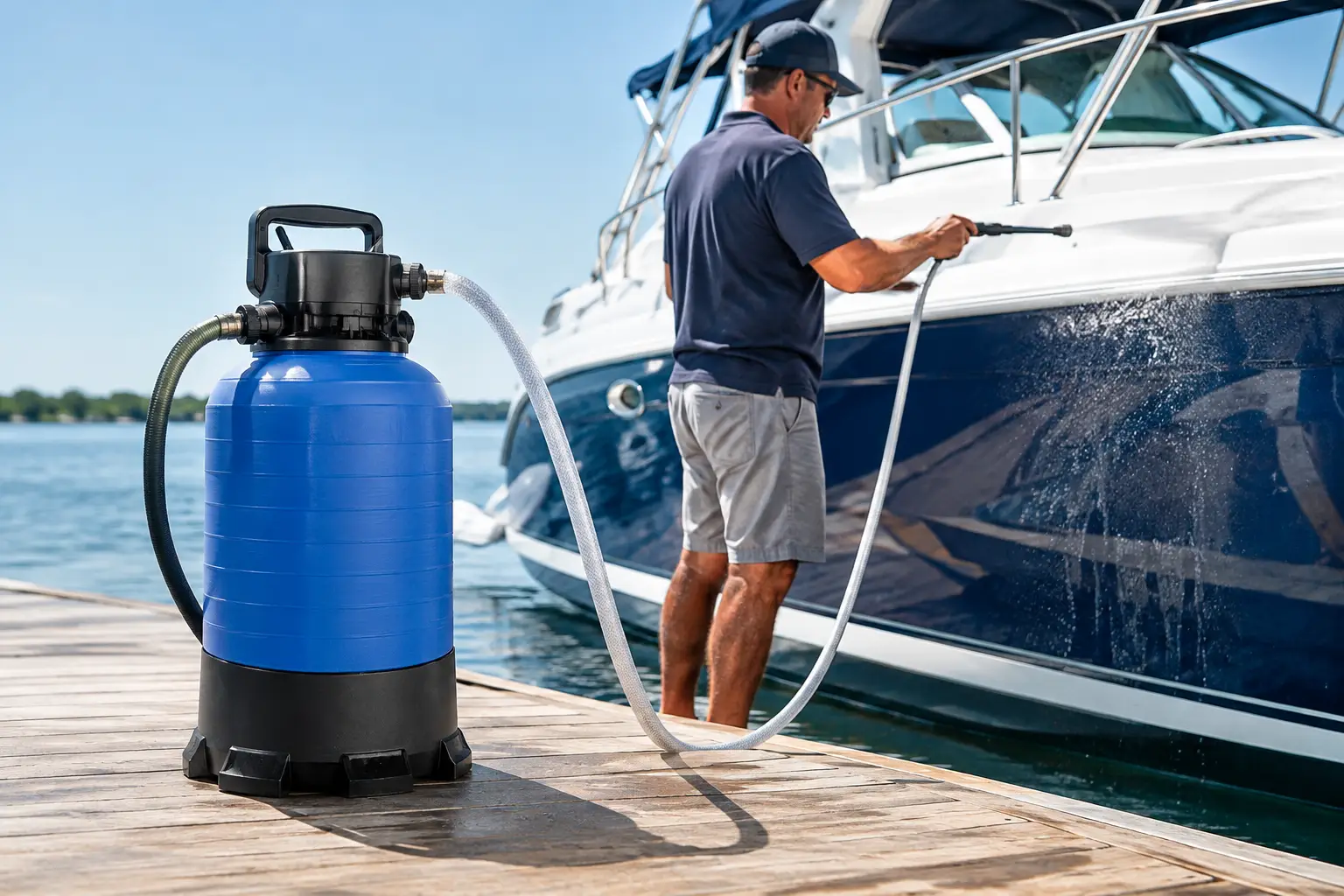
For owners who regularly wash at marinas, campgrounds, driveways, hangars, or storage facilities, a portable softening system provides a practical advantage: better rinse water without an electrical hookup, pressure loss, or permanent installation. Wet Spot portable soft water systems are built for exactly that kind of real-world use – protecting expensive finishes while making routine cleaning faster and more effective.
The Bottom Line for Your Equipment
Soft water does not corrode metal under normal washdown conditions. What it does is remove the hardness minerals that create spots, scale, and stubborn residue on the surfaces you work hard to protect. The real corrosion risks are salt, chlorides, standing water, incompatible metals, damaged coatings, and electrical issues.
Use soft water to leave your boat, RV, vehicle, or aircraft cleaner with less mineral residue. Then give metal the protection it needs: rinse contaminants away, keep surfaces dry when possible, and investigate unusual corrosion instead of blaming the water that helped keep the finish clean.