A clean boat can look great at the dock, then show white spots on the glass, dull streaks on the gelcoat, and crusty deposits around fixtures once the water dries. That is why the water softener vs conditioner question matters. These systems are often grouped together, but they do different jobs. For boat owners, RV owners, and anyone washing a valuable vehicle or aircraft, the difference affects cleaning time, scale protection, soap performance, and the condition of expensive finishes.
Water Softener vs Conditioner: The Main Difference
A water softener removes hardness minerals from water. Hardness is primarily caused by dissolved calcium and magnesium. Those minerals are harmless to drink, but they become a maintenance problem when water evaporates. They are what leave behind hard water spots, lime scale, and chalky buildup.
A conventional water softener uses ion exchange. Inside the tank, resin beads trade sodium or potassium ions for calcium and magnesium ions. The water leaving the system is genuinely softened because the hardness minerals have been removed. This is the type of water that rinses cleaner, helps soap work better, and leaves far less mineral residue on surfaces after drying.
A water conditioner generally does not remove calcium and magnesium from the water. Instead, it changes how those minerals behave. Depending on the technology, a conditioner may alter mineral crystal formation or keep minerals suspended so they are less likely to form hard scale inside pipes and appliances.
That distinction is simple but critical: a softener removes the minerals causing hard water problems. A conditioner may reduce certain scale effects, but the minerals remain in the water.
Why the Difference Shows Up During Washdowns
For a homeowner focused only on pipe scale, a conditioner may be worth considering in some situations. But an owner washing a boat, RV, vehicle, or aircraft sees hard water on exposed surfaces every time the water dries. That changes the equation.
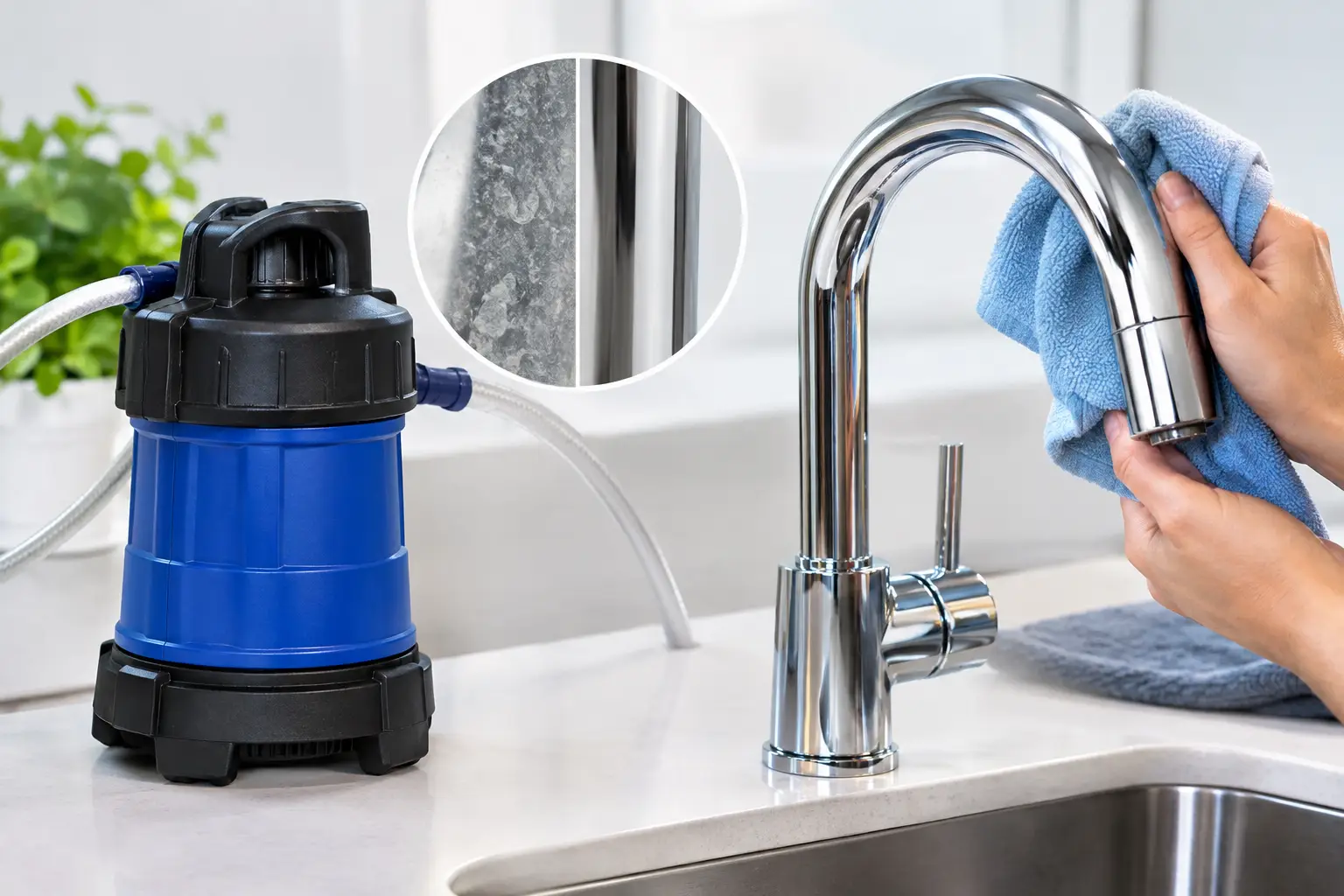
If calcium and magnesium remain in the rinse water, they can still leave deposits on gelcoat, paint, glass, chrome, stainless steel, plastic, and clear enclosures. A conditioner may help reduce stubborn scale formation in plumbing, but it does not provide the same spot-free rinsing benefit as truly softened water.
Soft water also changes the cleaning process. Soap and wash products lather more effectively in softened water, so less product may be needed to get a thorough clean. Rinsing is easier because there are fewer minerals left behind to bond to the surface. This matters when washing large areas such as hull sides, decks, windshields, awnings, or RV exteriors.
For a boat owner, the practical goal is not just cleaner plumbing. It is less time chasing water spots after every washdown and fewer mineral deposits on equipment that is costly to maintain.
What a Water Conditioner Can Do Well
A conditioner is not automatically the wrong choice. It simply solves a different problem. Many conditioners are installed inline and require little ongoing service. Because they do not remove minerals through resin exchange, they often do not need salt regeneration. Some are designed for permanent residential plumbing systems where reducing scale in water heaters, pipes, and appliances is the main objective.
A conditioner can make sense when space is limited, installation must be permanent, and the owner is primarily concerned with minimizing internal scale rather than producing soft rinse water. It may also appeal to users who do not want to manage a regeneration process.
The trade-off is that hard minerals are still present. If your priority is preventing dried-on spotting on a dark hull, windshield, polished metal, or freshly detailed vehicle, a conditioner will not deliver the same result as a true softener.
When a Portable Water Softener Is the Better Tool
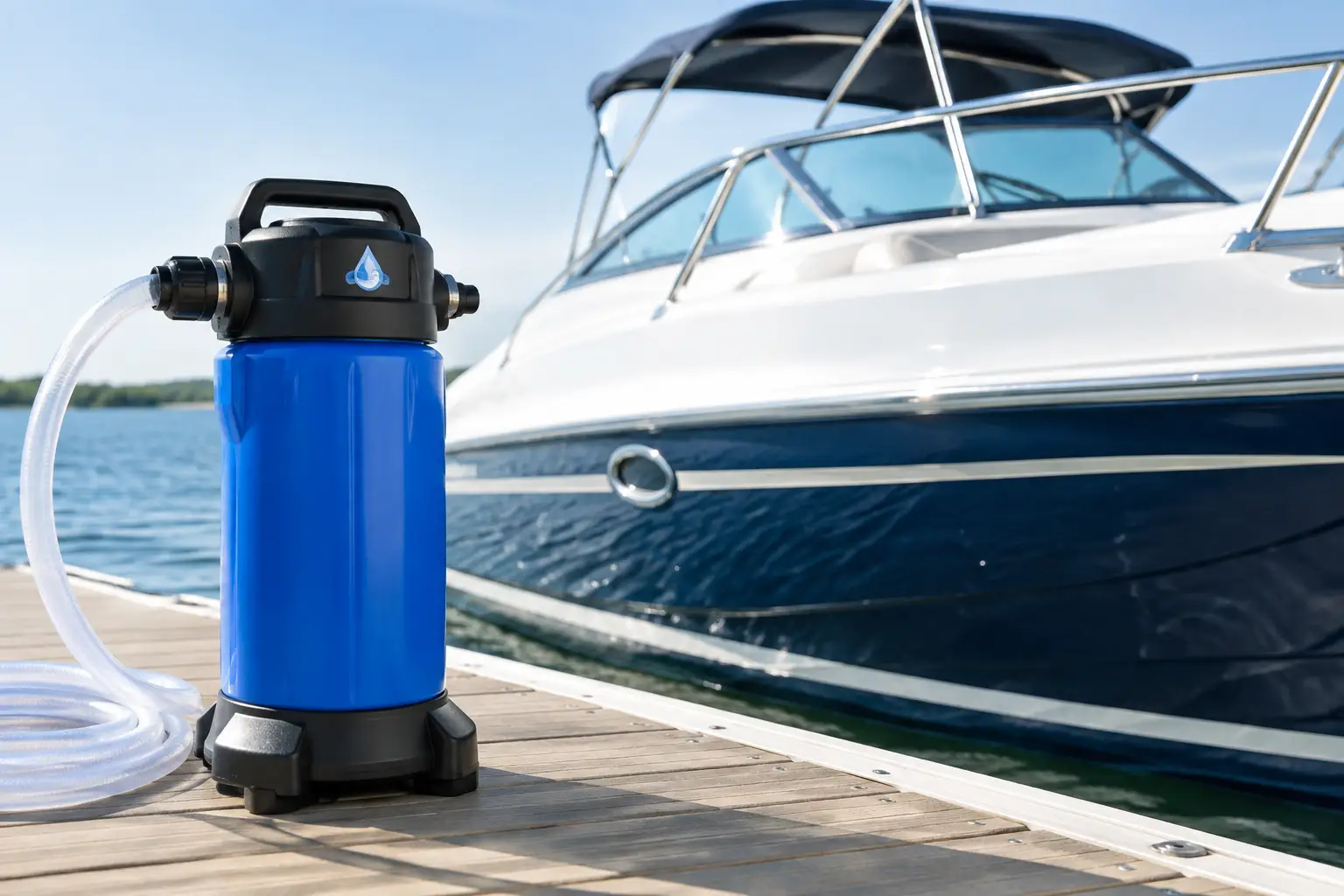
A portable softener is built for owners who need softened water where they use it, not only where a system can be permanently installed. That makes it particularly useful at marinas, campgrounds, storage facilities, and wash areas where the water supply may be hard and electrical power may not be convenient.
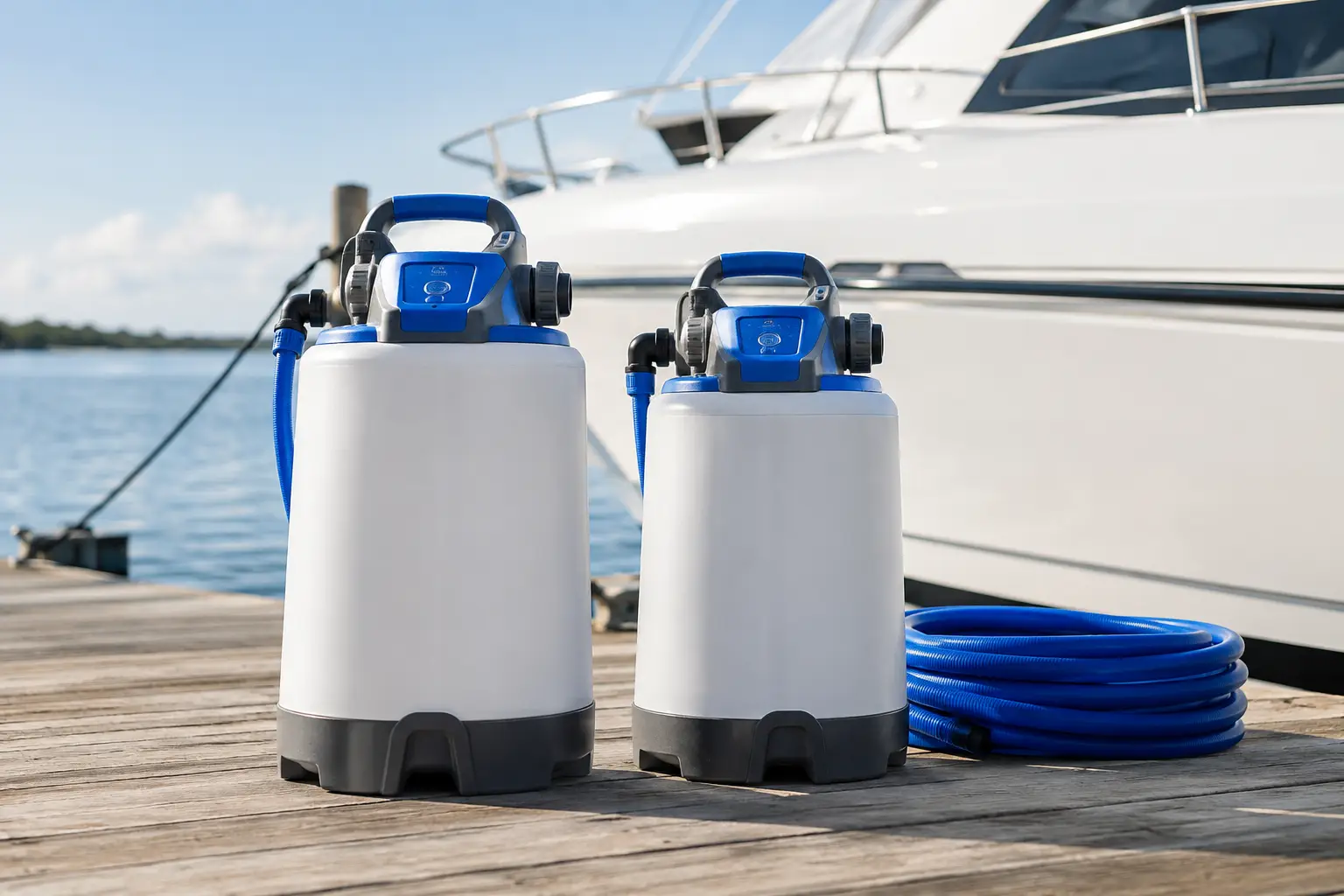
For mobile applications, the right system should connect easily to a standard water source, preserve usable water pressure, and travel without becoming another complicated piece of equipment to manage. It should also be sized for the asset and the expected water use. A small runabout, a large yacht, and a motor coach do not have the same washdown demands.
Wet Spot portable soft water systems are designed around that practical need. They use ion exchange to remove calcium and magnesium, require no electrical hookup, and can be manually recharged when the resin needs to be renewed. The result is soft water for washdowns and onboard use without a permanent installation.
Softener vs Conditioner for Boats and Yachts
On a boat, hard water does more than make a washdown look unfinished. It can leave scale around deck fittings and faucets, cloud glass and clear vinyl, reduce the appearance of polished metal, and build up in onboard plumbing and appliances. The larger and more valuable the vessel, the more expensive that neglect becomes over time.
A conditioner may reduce some internal scale concerns, but it does not remove the minerals responsible for the spots visible on exterior surfaces. For owners who care about preserving gelcoat, metal, glass, plastic, eisenglass, plumbing, and onboard equipment, softened water is the more direct solution.
This is especially true when a boat is washed frequently or kept in an area with very hard water. The minerals accumulate gradually. At first, they create a few white spots and rough patches. Over months and seasons, they can turn routine detailing into a more demanding restoration job.
Softener vs Conditioner for RVs, Vehicles, and Aircraft
The same logic applies beyond the marina. An RV exterior has broad panels, windows, trim, and seals that are exposed to rinse water during every wash. A vehicle can develop visible spotting on paint, glass, wheels, and brightwork. Aircraft owners and caretakers need to be especially careful with mineral residue on sensitive surfaces and around fittings.
Conditioned water may help in a fixed plumbing application, but a portable softener is better suited to washdowns where the goal is cleaner drying and less residue. It gives owners a way to control water quality even when the available water source changes from one location to the next.
That portability matters. Hardness levels can vary widely between marinas, campgrounds, and service areas. Having a dependable softening system on hand prevents the local water supply from dictating the condition of your finish.
Consider Maintenance Before You Choose
The strongest argument for a conditioner is often lower maintenance. Since many conditioners do not use regenerable resin, there may be little for the owner to do after installation. But easy maintenance is only a benefit if the system performs the job you actually need.
A portable softener requires periodic recharge. That is part of how ion exchange continues to remove hardness minerals. The recharge process restores the resin so the system can keep producing soft water. For owners who value spot reduction, scale control, and better wash performance, that small maintenance step is usually a fair trade.
When comparing systems, consider the hardness of your water, how often you wash, the size of your vessel or vehicle, and whether you need softened water at multiple locations. Also look at construction quality. Mobile equipment needs to handle transport, weather, dockside use, and regular connections without becoming a weak point in your maintenance routine.
Choose Based on the Problem You Want to Solve
If your main concern is reducing scale inside a permanent plumbing system, a water conditioner may be a reasonable fit. If you want to remove calcium and magnesium from your water, reduce water spots after washing, improve soap performance, and protect high-value exterior surfaces, choose a true water softener.
The best system is the one that matches the work you expect it to do. For mobile owners, soft water is not an abstract water-treatment feature. It is a practical way to spend less time removing mineral residue and more time enjoying an asset that stays cleaner between details.