That white ring around a deck fitting, cloudy haze on a dark hull, and stubborn spots on the windshield are not just washdown annoyances. Can hard water damage boat gelcoat? Yes. The damage is usually gradual, but repeated exposure to calcium- and magnesium-heavy water can leave mineral deposits that dull the finish, stain surfaces, and make routine maintenance more aggressive than it needs to be.
For a boat owner, that matters. Gelcoat is one of the first things people see, and restoring a neglected finish takes far more time and money than preventing hard-water buildup during regular washdowns.
Can Hard Water Damage Boat Gelcoat Over Time?
Hard water does not usually destroy gelcoat in one rinse. The problem begins when water dries on the surface. As the water evaporates, it leaves calcium, magnesium, and other dissolved minerals behind. Those deposits form visible spots and chalky rings, especially on dark-colored gelcoat, smooth topsides, glass, stainless steel, and clear vinyl.
Left in place, mineral deposits can become tightly bonded to the surface. They trap dirt, collect salt residue, and make the boat look dull even after it has been washed. Owners often respond with stronger cleaners, acidic spot removers, abrasive pads, or repeated polishing. That is where a cosmetic issue can turn into real finish wear.
Gelcoat is durable, but it is not invincible. Aggressive cleaning can remove wax or sealant protection, create fine scratches, and gradually reduce the surface’s gloss. If water spotting and scale are allowed to build up for months or seasons, correcting them may require compounding and polishing that removes a small amount of material each time.
The direct answer is simple: hard water is not a harmless rinse water. It can create the deposits and maintenance cycle that shorten the life of a clean, protected gelcoat finish.
Why Mineral Spots Become a Bigger Boat Problem
A boat is exposed to more than one source of contamination. After a day on the water, the hull and deck may carry salt spray, airborne grime, fish residue, sunscreen, fuel film, dock dust, and organic debris. When hard water dries over that mix, it leaves mineral residue behind and can lock contaminants onto the surface.
This is especially noticeable around rail bases, deck hardware, scuppers, windows, hatches, and transom areas where water tends to pool or drip. It also shows up on vertical hull sides where rinse water runs down and dries before it can be wiped away.
Hard-water spotting is often worse in warm weather because evaporation happens quickly. A boat washed at the dock under direct sun may develop spots before the final rinse is complete. High heat, dark gelcoat, and hard municipal or well water are a frustrating combination.
Not every white mark is the same. Salt residue can leave crystals, oxidation can create a chalky appearance, and old wax can haze. But if the marks return after each washdown and are difficult to remove with normal boat soap, hard-water minerals are a likely cause.
The Hidden Cost of Repeated Correction
A single spot-removal session may not harm a boat. The trade-off comes from repetition. Strong chemical cleaners may be needed to dissolve mineral scale, while polishing may be needed to restore clarity and gloss. Both have a place when used correctly, but neither should be part of every wash.
Every unnecessary correction adds labor. It also increases the chances of uneven shine, stripped protection, damaged decals, cloudy clear vinyl, or residue around fittings. On larger boats and yachts, that labor adds up quickly because there is simply more surface to maintain.
Preventing mineral deposits is more efficient than removing them after every washdown.
What Hard Water Can Affect Besides Gelcoat
Gelcoat often gets the attention because spotting is easy to see, but hard water does not stop at the hull. A hard-water rinse can leave scale on glass, stainless steel, chrome, painted surfaces, non-skid, plastic trim, and clear vinyl. It can also affect onboard fixtures, shower doors, faucets, hoses, and appliances when hard water is used in the boat’s freshwater system.
Clear vinyl deserves particular care. Mineral spots and harsh attempts to remove them can reduce clarity over time. Stainless steel may develop water marks that distract from an otherwise clean boat. Non-skid can hold mineral residue deep in its texture, making it look gray or dirty even after scrubbing.
Soft water improves the entire washdown process. Soap rinses more cleanly, fewer minerals remain when water dries, and wiping is easier. The result is not only a better-looking gelcoat but less effort across the boat.
How to Protect Boat Gelcoat From Hard Water
The most effective approach is to prevent spots before they dry. Start with a quality marine soap that is appropriate for gelcoat and existing wax or sealant protection. Wash one manageable section at a time, rinse thoroughly, and avoid letting soap or rinse water dry in direct sunlight.
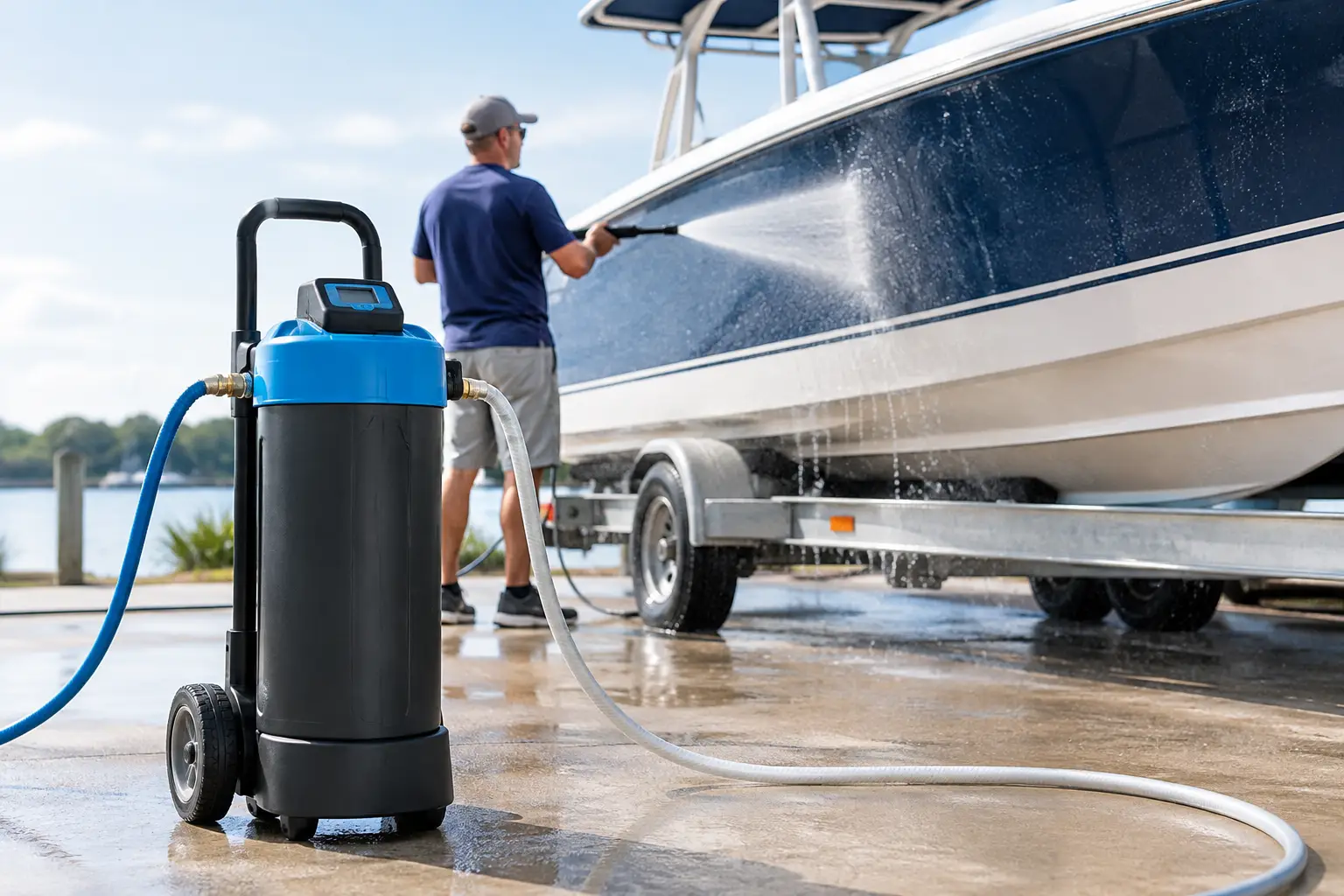
A final rinse with soft water is one of the most practical protections available to boat owners. By removing the calcium and magnesium that cause hard-water deposits, soft water dries with far less spotting. It also helps soap perform better, so washdown residue rinses away more easily.
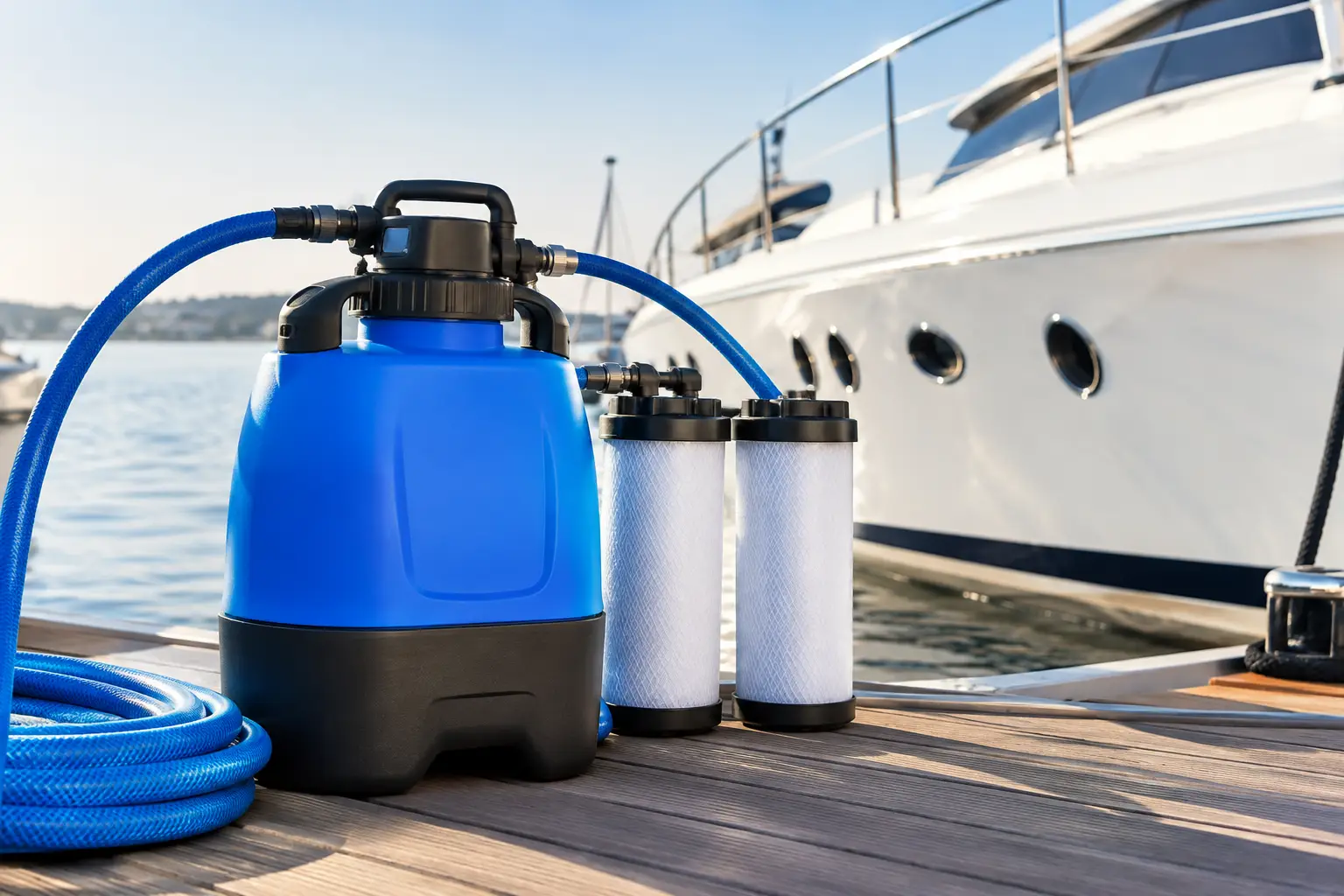
Portable soft-water systems are particularly useful at marinas, storage facilities, and docks where the water supply may be hard and permanent treatment is not available. Wet Spot portable water softeners provide soft water without electrical hookup or a complicated onboard installation, making them a practical fit for regular washdowns and freshwater use.
Keep a protective layer on the gelcoat as well. Wax, polymer sealants, and ceramic-style marine protectants can make it easier to rinse away contaminants and reduce how strongly spots adhere. Protection is not a substitute for soft water, however. A protected surface can still develop mineral deposits when hard water repeatedly dries on it.
A Better Washdown Routine
A dependable routine is more valuable than an occasional intensive detail. Rinse loose salt and dirt first. Wash from the top down so dirty water does not run over cleaned areas. Keep surfaces wet while you work, then use a soft-water final rinse before drying high-visibility areas with clean microfiber towels or a blower.
If you cannot dry the entire boat, prioritize glass, clear vinyl, dark gelcoat, polished metal, and horizontal surfaces where spots are most obvious. Do not use rough pads, household scouring products, or strong acid cleaners as a first response to water spots. Use products designed for marine finishes and follow their directions carefully.
What to Do When Hard-Water Spots Are Already There
Fresh spots are easier to remove than old scale. Begin with a normal wash using a marine-safe soap and plenty of water. If the marks remain, use a dedicated marine water-spot remover that is suitable for gelcoat, and test it in a small inconspicuous area first.
Work gently. Let the product do the cleaning rather than scrubbing harder. Rinse thoroughly, dry the area, and inspect the finish in good light. If the gelcoat still looks hazy after deposits are gone, it may need polishing or professional correction, particularly if it has been repeatedly cleaned with abrasive products.
After correction, restore the protective coating and change the washdown water if possible. Otherwise, the same mineral deposits will return and the correction cycle starts again.
Hard water does not have to become part of boat ownership. Give your gelcoat a cleaner final rinse, keep mineral deposits from setting up on the surface, and your next washdown can protect the finish instead of creating more work.