
A clean yacht can look freshly detailed for about five minutes after a hard-water washdown. Then the sun dries the rinse water, and mineral spots begin showing up on glass, gelcoat, stainless, rails, fixtures, and eisenglass. Over time, those same minerals leave scale inside hoses, plumbing, water heaters, and onboard appliances.
The best water softener for yacht use is not simply the largest unit available. It is the unit that matches your vessel, your water use, and the way you actually maintain the boat. For most yacht owners and crews, that means a portable system with enough softening capacity for regular washdowns, no electrical requirement, no meaningful loss of water pressure, and a straightforward manual recharge process.
What a Yacht Water Softener Needs to Do
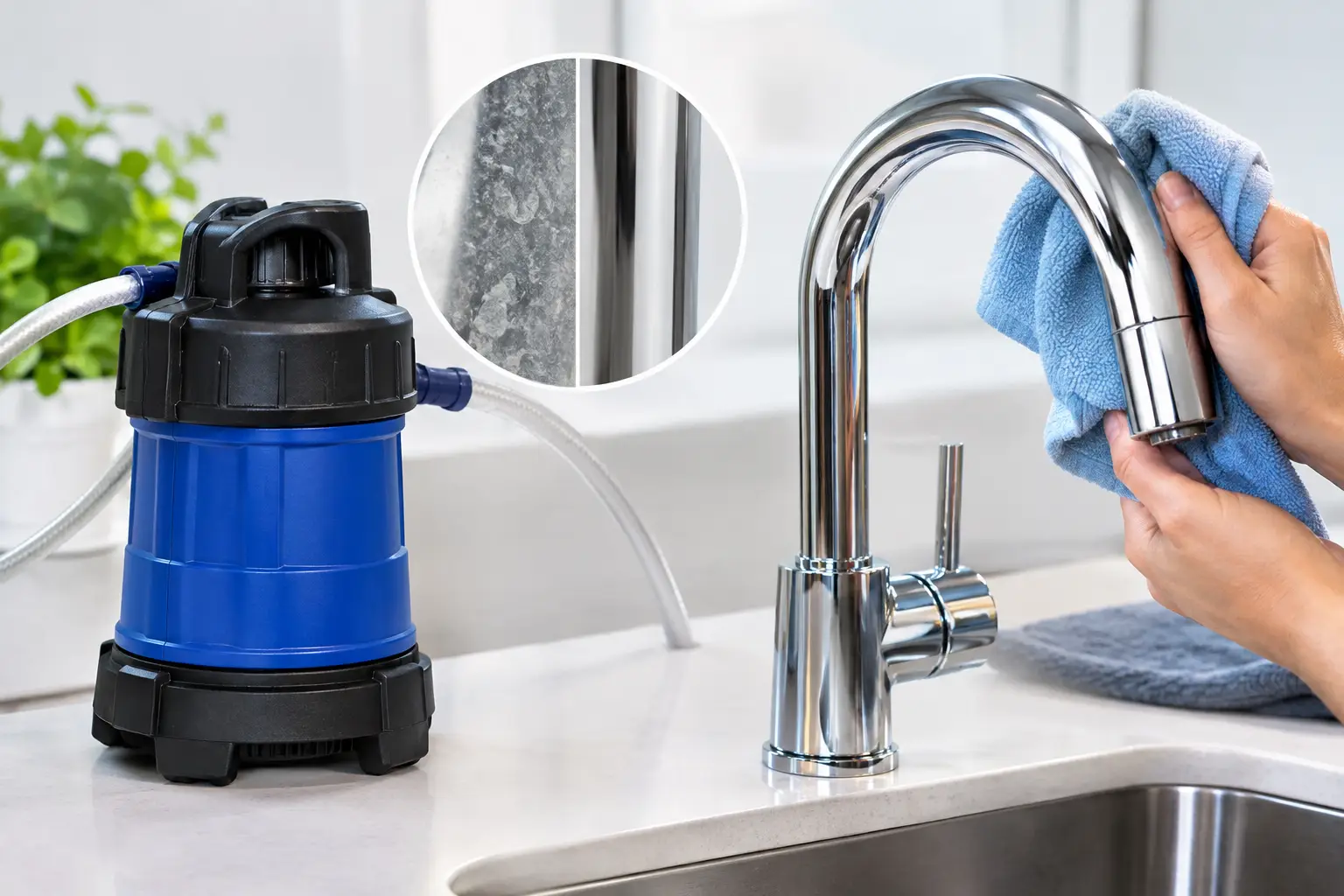
A water softener removes hardness minerals, mainly calcium and magnesium, from the incoming water supply. These minerals are responsible for the white spots and crusty scale that make yacht cleaning harder than it needs to be. Soft water allows soap to work better, rinses cleaner, and helps prevent mineral deposits before they bake onto expensive surfaces.
For a yacht, that protection goes beyond appearance. Hard-water scale can build up in dockside hoses, freshwater plumbing, shower fixtures, water heaters, ice makers, and other appliances that rely on water. Softening the water before it reaches the boat helps reduce that buildup and the maintenance that follows.
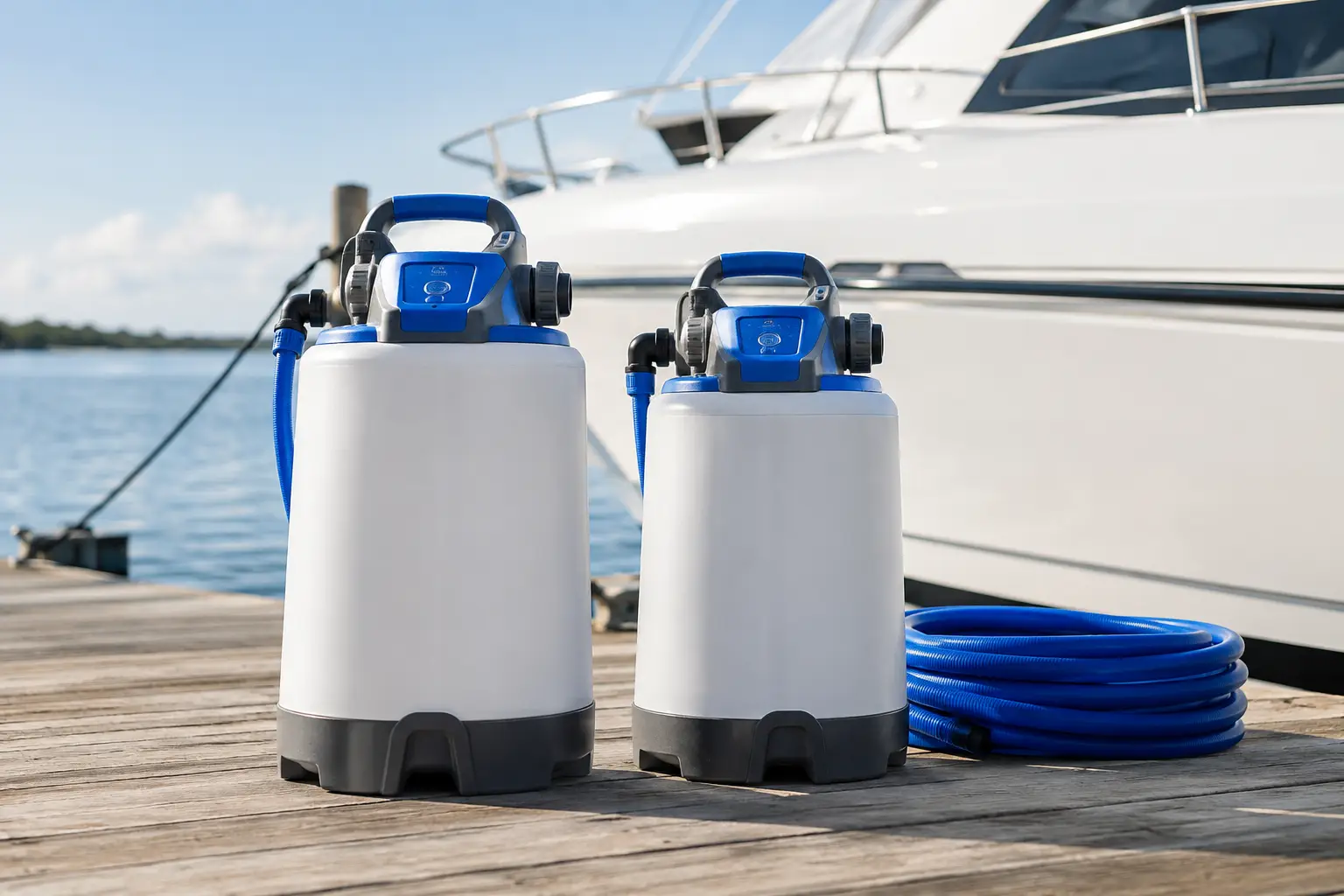
A portable softener is especially practical at marinas because it connects between the dock water source and your hose. There is no permanent installation to plan, no electrical hookup to find, and no complicated system to operate. When it is time to leave the dock, the unit comes with you.
A water softener is not a watermaker and does not make unsafe water potable. Its purpose is to condition hard water supplied at the dock or other freshwater source. That distinction matters when selecting equipment for an onboard water system.
Choosing the Best Water Softener for Yacht Size
Vessel length is a useful starting point because it usually reflects the amount of exterior surface, plumbing, and washdown demand you need to cover. It is not the only factor. A lightly used 85-foot yacht may need less capacity than a 65-foot boat that receives frequent washdowns, has a full-time crew, or spends time in areas with very hard municipal water.
Yachts up to 70 feet
For boats up to 70 feet, portability often carries as much weight as total capacity. Owners typically want a unit that is easy to lift, store, connect, and recharge without turning routine maintenance into another project. A properly sized portable softener can supply soft water for regular exterior rinsing, soap-and-water cleaning, and freshwater fill-ups.
Do not choose an undersized unit solely because it is compact. If the system exhausts quickly during a thorough washdown, you will spend more time recharging and may be tempted to bypass it. The right small-vessel unit should be manageable while still supporting the way you use the boat.
Yachts from 70 to 100 feet
At this size, washdowns tend to use more water and protect more valuable surface area. There may be more stainless, more glass, larger decks, additional heads, and more onboard equipment exposed to scale. Capacity becomes a greater consideration, particularly for boats kept in hard-water marina areas.
Look for a portable system designed to support longer cleaning sessions without sacrificing hose pressure. Weak flow makes a washdown slower and less effective. A quality softener should condition the water while allowing the crew to work at a normal pace.
Yachts over 100 feet
Larger yachts need serious capacity and durable construction. A small softener may still help with limited tasks, but it can become impractical as the primary source for regular washdowns and freshwater service. Bigger vessels often benefit from a larger portable unit or multiple units, depending on the crew’s workflow and water demand.
For yachts over 100 feet, consider where the unit will sit during use, how it will be moved on and off the dock, and who will handle recharging. The best setup is one that can be used consistently. Equipment that is difficult to position or maintain eventually gets left in storage, which defeats the purpose.
Wet Spot offers portable soft water systems sized for boats up to 70 feet, 70 to 100 feet, and 100 feet and above, making vessel size a practical part of the selection process rather than an afterthought.
The Features That Matter at the Dock
Marine equipment needs to earn its place aboard. When comparing yacht water softeners, focus on the features that affect daily use and long-term ownership.
First, look for a unit that does not require electricity. Dock power is useful, but a water softener should not depend on an outlet, an extension cord, or a powered control system to do its job. A non-electric system gives you more flexibility at different marinas and simplifies setup.
Second, pay attention to water flow. The goal is soft water without turning a normal washdown into a slow trickle. A system that maintains good water pressure lets you rinse soap, salt, and debris efficiently while still reducing spotting and scale.
Third, construction matters. Yacht equipment is exposed to wet docks, salt air, changing temperatures, and the occasional rough ride in a locker or dock cart. Choose a unit built for mobile use, with components that can handle regular transport instead of a fragile residential-style setup intended to stay in a utility room.
Finally, consider the warranty and the availability of real support. A softener is a piece of long-term maintenance equipment, not a disposable accessory. A strong warranty signals that the manufacturer expects the unit to remain in service for years.
Recharge Should Be Simple, Not a Surprise
Portable water softeners use resin media to capture hardness minerals. Once the resin reaches capacity, it must be recharged with common salt so it can soften water again. This is normal maintenance, not a defect or an inconvenience to avoid.
The key is choosing a system with a clear, manual recharge procedure that you or your crew can complete without special tools or technical training. Recharge frequency depends on the hardness of the source water and the number of gallons used. Water at one marina may require more frequent recharging than water at another, even if your cleaning routine stays the same.
If you regularly move between marinas, assume water conditions will vary. Watch for the return of water spots, reduced soap performance, or visible scale around fixtures. Those are practical signs that it is time to recharge or check the system.
Portable vs. Permanently Installed Systems
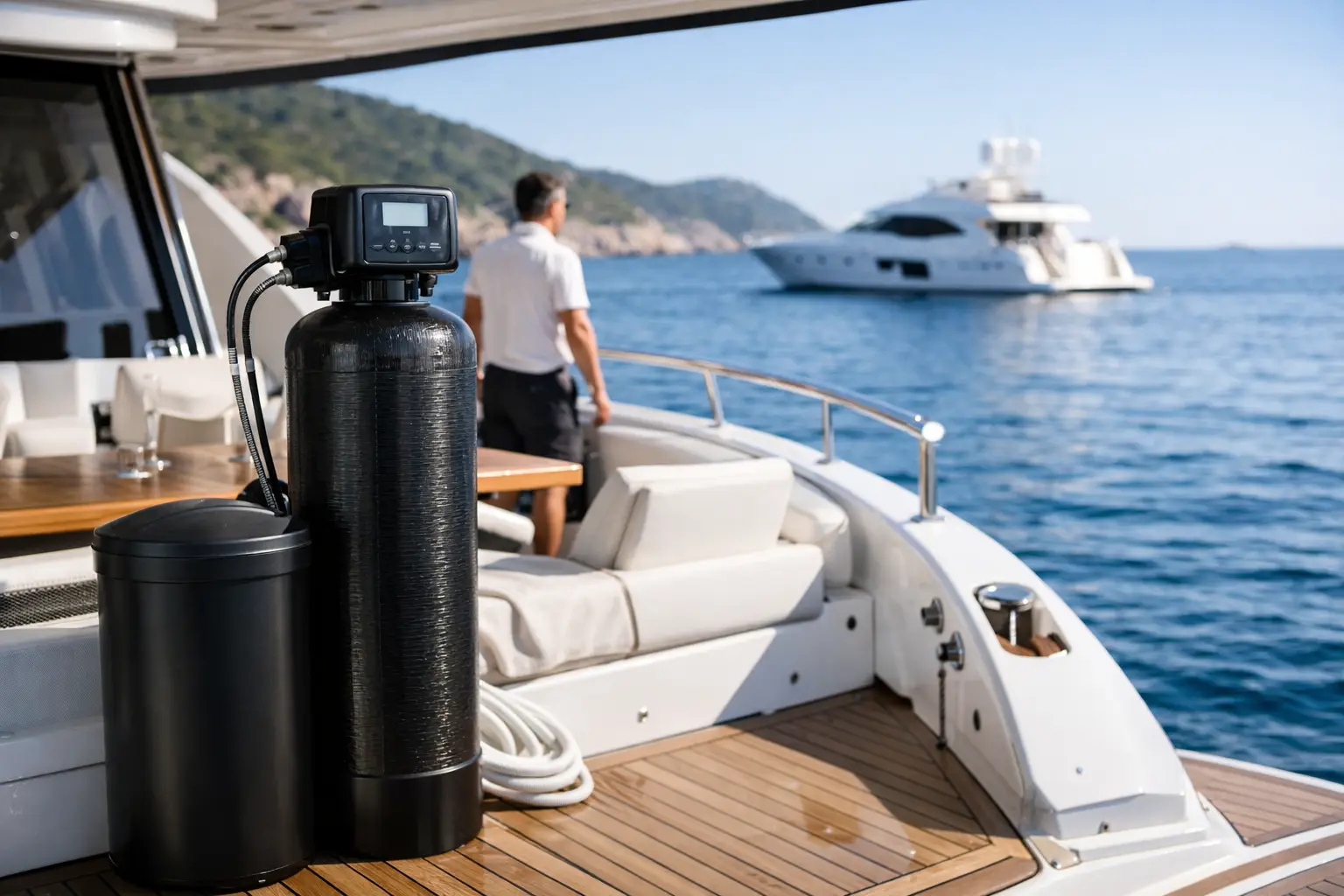
A permanently installed water softener can make sense for a yacht with a dedicated mechanical space, predictable dockside use, and a crew prepared to manage installation and service. It may offer higher capacity, but it also takes up space and adds complexity to the boat’s plumbing.
For many owners, a portable softener is the better answer. It can be used on the dock, moved between vessels or other equipment, and stored when not needed. It also protects the yacht without requiring modifications to an expensive plumbing system.
Portability is not a compromise when the unit is built for the job. It is an advantage for yacht owners who want soft water where they need it, without adding another permanent system to maintain.
Avoid These Common Buying Mistakes
Do not buy based on vessel length alone. Consider how often the yacht is washed, whether you fill onboard tanks from the dock, how hard the local water is, and whether the boat has appliances that are sensitive to scale. A unit that is correctly matched to your real water use will provide better value than a bargain unit that needs constant attention.
Avoid confusing filtration with softening. A filter can remove sediment or improve taste, depending on its design, but it does not necessarily remove the calcium and magnesium that cause hard-water spots. If your primary problem is spotting and lime scale, you need a true water softener.
Also, do not overlook storage and handling. Measure the locker, dock box, or equipment area where the unit will live. Make sure the connections work with your hose arrangement. The right system should fit naturally into your washdown routine, not require a workaround every time you use it.
Soft water will not replace good yacht care, but it makes every washdown more productive. Start with the vessel size and your actual water demand, then choose a durable portable unit you will use consistently. Your gelcoat, glass, metalwork, plumbing, and crew will show the difference.