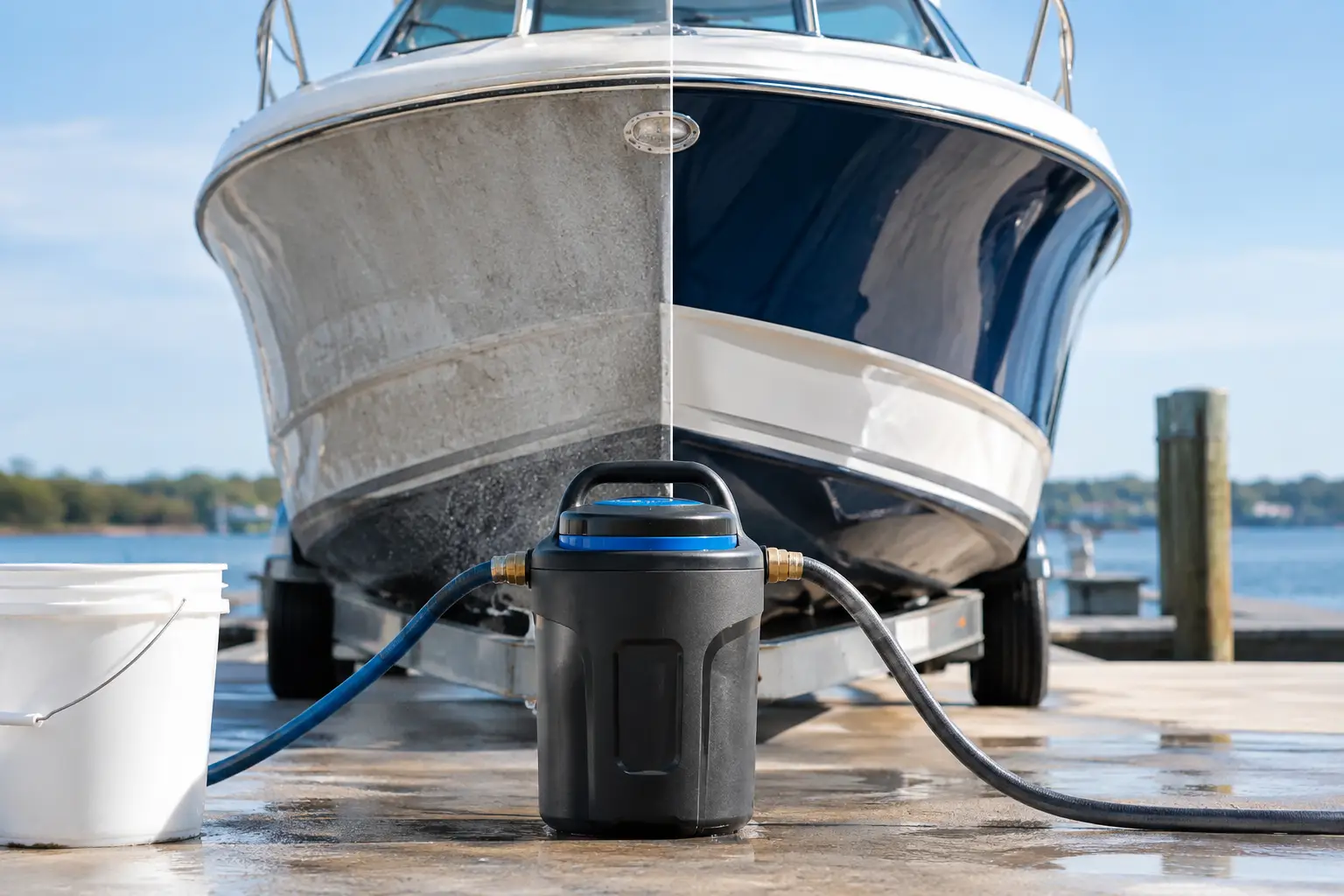
A washdown can leave a boat looking worse than before you started. The culprit is often not the soap, brush, or technique. It is the water itself. In the soft water vs hard water washing debate, hard water leaves calcium and magnesium behind as it dries, creating spots, haze, scale, and extra detailing work on the surfaces you are trying to protect.
For boat owners, that difference matters every time freshwater is connected at a dock, marina, storage yard, or home. Hard water does not just affect appearance. Over time, its mineral content can build up on fixtures, inside plumbing, and around appliances. Soft water changes the washdown process by removing the minerals that cause those deposits in the first place.
What Makes Water Hard or Soft?
Hard water contains dissolved calcium and magnesium. The amount varies widely by location. Water may look perfectly clear coming from the hose while still carrying enough minerals to leave white spotting on gelcoat, glass, stainless steel, vinyl, and eisenglass once it evaporates.
Soft water has had those hardness minerals removed or substantially reduced. A portable water softener does this through ion exchange: water passes through resin media that captures calcium and magnesium. The result is water that rinses cleaner and works more effectively with soap.
This is different from simply filtering sediment or improving water taste. A basic filter may catch particles, but it does not necessarily remove the dissolved minerals responsible for hard-water spots and scale. If your goal is a cleaner rinse and less mineral buildup, hardness reduction is the job that matters.
Soft Water vs Hard Water Washing: The Difference You See
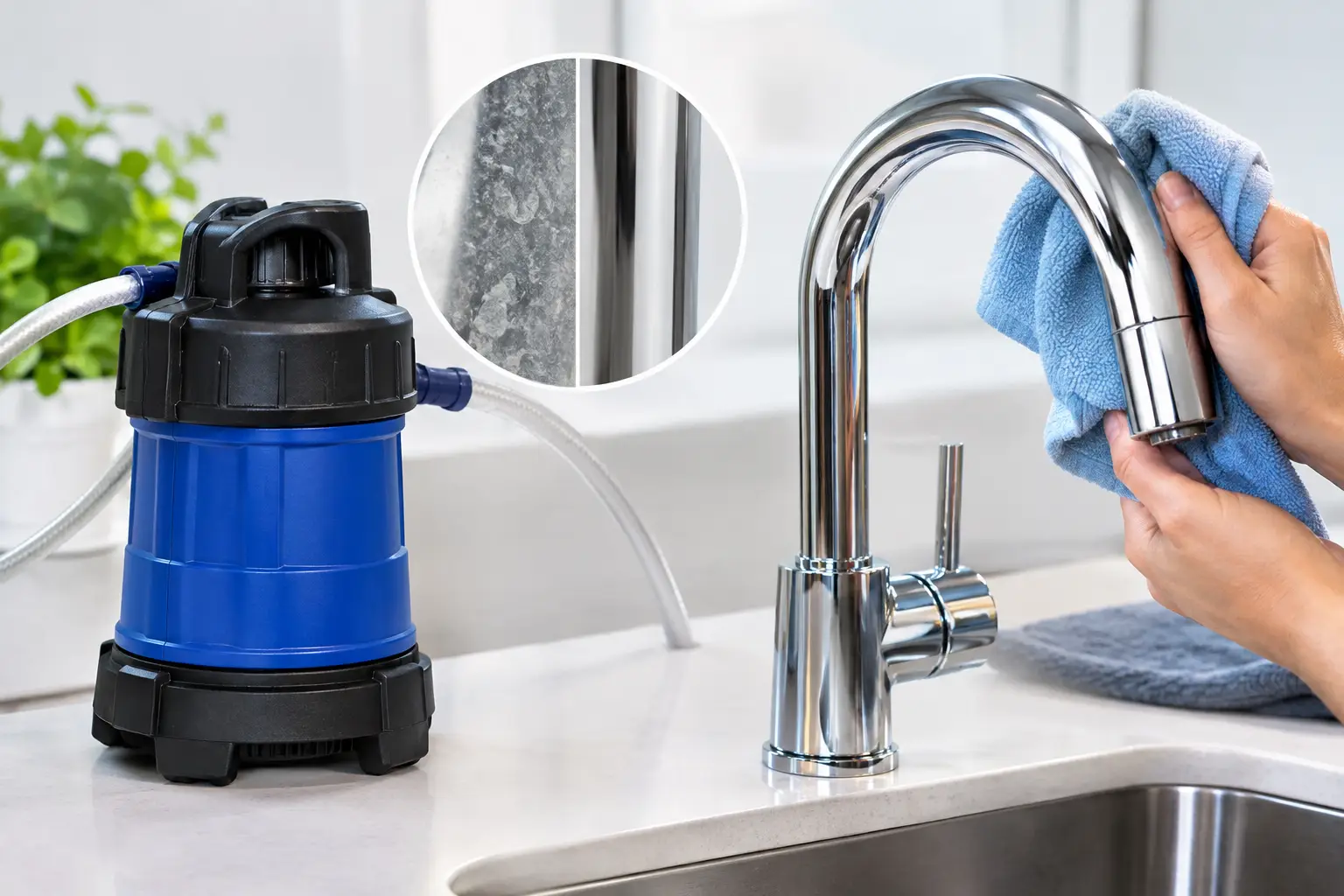
Hard water is most obvious after the water dries. A freshly washed hull, windshield, or stainless rail can develop a chalky film or individual white spots within minutes on a warm, sunny day. Wiping those spots off may restore the finish temporarily, but repeated mineral deposits can make routine cleaning more labor-intensive.
Soft water leaves far less mineral residue behind. That means fewer water spots on painted surfaces, gelcoat, glass, chrome, and polished metal. It also means there is less reason to rush around with a drying towel after every rinse just to prevent deposits from setting up.
The benefit is especially clear on dark-colored hulls, black trim, tinted windows, and highly polished stainless. These surfaces show every spot, streak, and haze mark. Soft water will not prevent salt spray, dirt, bird droppings, or other contaminants, but it removes one major source of avoidable cleanup after a washdown.
Soap Works Better With Soft Water
Hard water affects cleaning before the rinse stage, too. Calcium and magnesium react with soap and detergents, reducing their ability to lather and lift grime. That is why hard-water washing can require more product and more scrubbing than expected.
With soft water, soap performs more efficiently. You may be able to use less wash solution while getting better coverage and easier rinsing. The goal is not to flood a boat with suds. It is to use the right amount of product, remove dirt safely, and rinse without leaving behind a mineral film.
For owners and crews maintaining a vessel regularly, that improvement adds up. Less soap use, less rework, and less time chasing residue means a washdown becomes a maintenance task instead of a detailing project.
Why Hard Water Creates More Than Cosmetic Problems
Water spots are frustrating, but they are only the visible part of hard-water exposure. As hard water repeatedly dries on faucets, shower fixtures, hose connections, and washdown equipment, mineral deposits can form lime scale. Scale can restrict flow in small passages, make fixtures difficult to clean, and leave surfaces looking neglected even when they are otherwise in good condition.
Onboard appliances and plumbing are also vulnerable. Water heaters, ice makers, coffee makers, showerheads, and other systems that use freshwater can accumulate scale over time when supplied with hard water. The rate depends on local water hardness, how often the equipment is used, and whether water is allowed to sit in the system.
Soft water is not a substitute for normal vessel care, proper winterization, or manufacturer-recommended service. It is a practical way to reduce the mineral load entering your washdown routine and onboard freshwater systems. Preventing buildup is generally easier than removing it after it hardens.
Where Soft Water Makes the Biggest Difference on a Boat
Any freshwater washdown benefits from reduced hardness, but the gains are most noticeable on surfaces that show spots quickly or are expensive to restore. Gelcoat and painted finishes look cleaner after rinsing. Glass and eisenglass dry with less spotting. Stainless steel rails, hardware, and trim need less polishing to maintain their appearance.
Soft water is also useful for deck furniture, canvas, cockpit enclosures, non-skid, vinyl seating, and exterior shower areas. These are places where residue can collect in seams, around fittings, or in textured surfaces. Fewer minerals in the rinse water means less material left behind to clean later.
The same principle applies beyond the marina. RV owners deal with hard water at campgrounds. Vehicle owners see spotting on paint and glass after washing at home. Aircraft owners and caretakers want to avoid mineral residue on painted surfaces and windows. Portable soft water gives mobile assets a consistent water-treatment option without requiring a permanent installation.
When Hard Water May Not Be Your Main Problem
Not every water issue is a hardness issue. If water has sediment, odor, unusual color, or a known contamination concern, a softener alone is not the complete answer. Those conditions may require additional treatment or guidance from the water source operator.
Likewise, soft water does not eliminate the need to rinse saltwater exposure promptly. Salt, grime, fuel residue, sunscreen, and environmental fallout still need to be washed away with appropriate marine-safe products. Soft water improves the quality of that rinse and reduces mineral spotting afterward.
It also helps to be realistic about drying conditions. In direct sun and high heat, even softened water can dry quickly and leave behind traces of whatever was on the surface before rinsing. Working in sections, using a clean wash mitt, and rinsing thoroughly remain good practice.
Making Soft Water Part of Your Washdown Routine
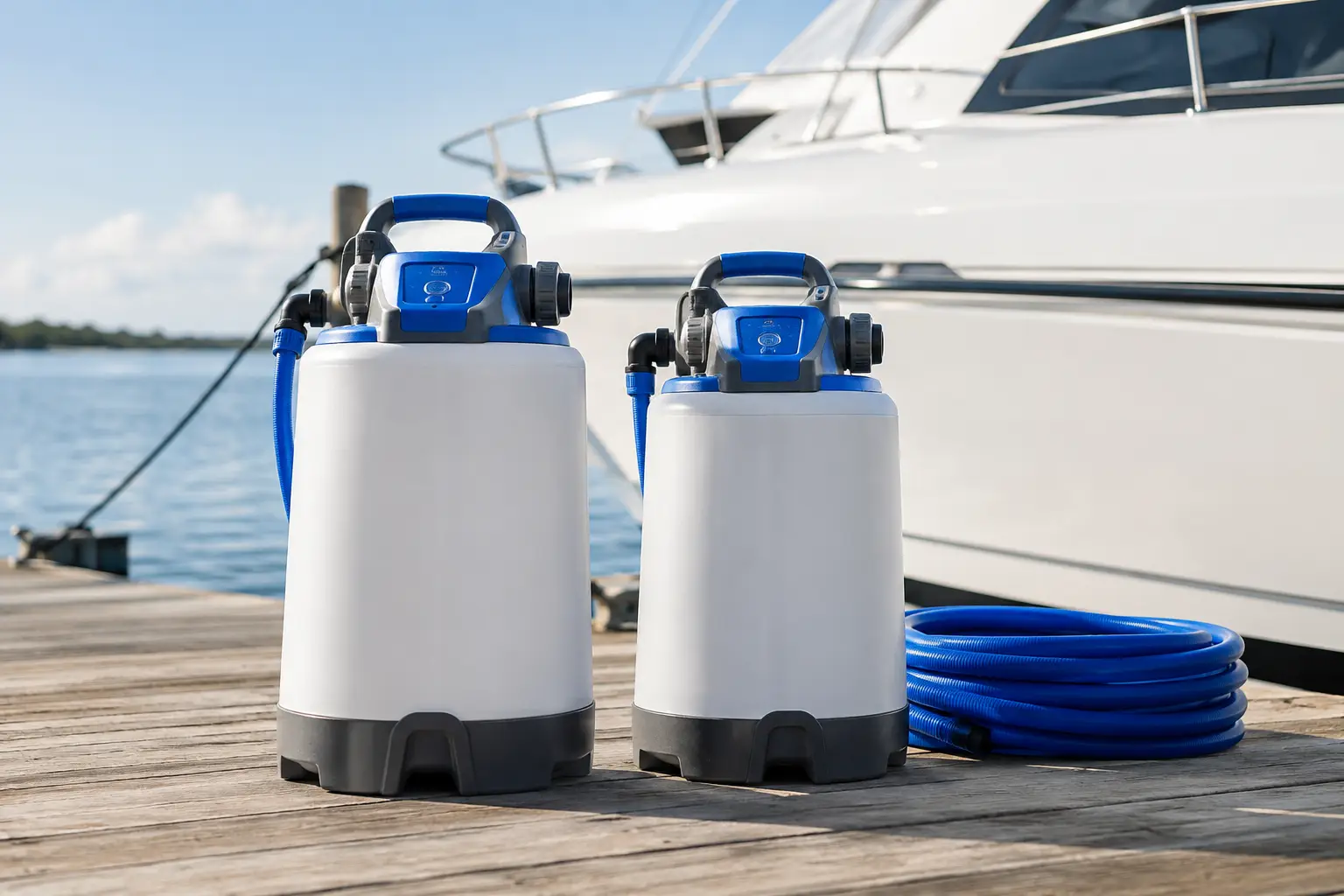
A portable water softener is designed to fit the way boat owners actually work. Connect it between the freshwater source and your hose, then use the softened water for washing, rinsing, or onboard freshwater needs as appropriate. There is no electrical hookup required and no complicated permanent plumbing installation.
Capacity matters. A smaller boat with occasional washdowns has different needs than a large yacht with frequent exterior cleaning and greater onboard water demand. Choose a unit sized for the vessel and the way it is used, not just the length of a single wash session. When the resin is exhausted, it can be manually recharged with salt so the system is ready to work again.
Before recharging, follow the equipment instructions and local rules for discharge. Marina policies and local regulations can vary, particularly around where regeneration water may be released. A simple maintenance routine keeps a portable softener dependable without adding unnecessary complexity to ownership.
Wet Spot was built around that practical need: portable soft water protection for boats and other high-value mobile assets, with rugged construction and no dependence on shore power. The purpose is straightforward – protect finishes, reduce scale, and make routine cleaning easier wherever hard water is part of the job.
A clean boat should not require polishing away the rinse water after every wash. Start with water that is less likely to leave minerals behind, and your regular maintenance routine can do more to preserve the surfaces you paid to protect.