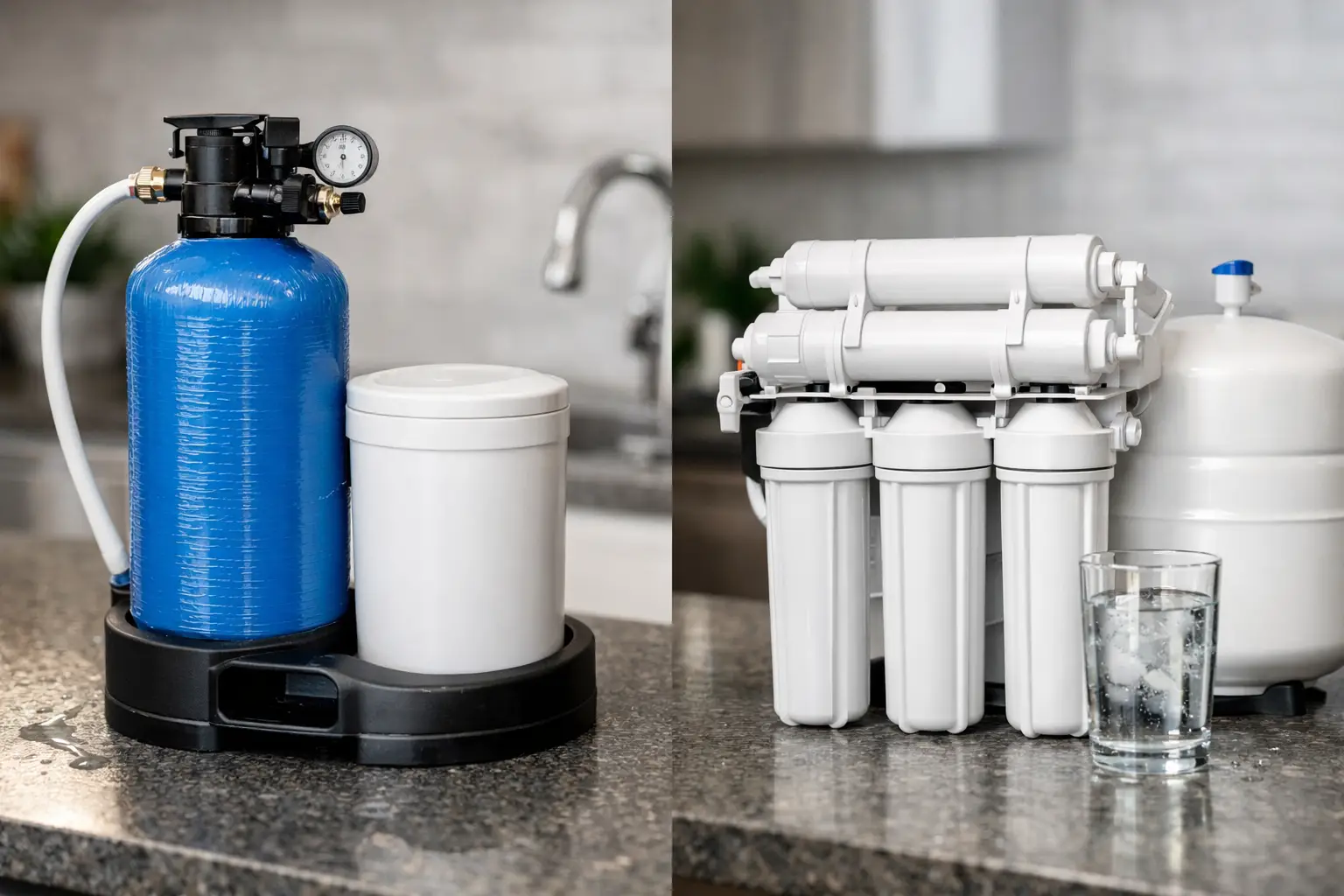
A spotless washdown can be undone in minutes when hard water dries on gelcoat, glass, stainless, and Eisenglass. That is why the water softener versus reverse osmosis question matters for boat owners, RV users, and anyone protecting a high-value vehicle or aircraft. The two systems treat water differently, solve different problems, and are not automatically interchangeable.
A portable water softener is built to address the daily damage and labor caused by hard water. Reverse osmosis is typically selected when the goal is highly purified water, often for drinking, cooking, or specific water-quality needs. Understanding that difference helps you buy equipment for the job at hand instead of adding complexity where it does not belong.
Water Softener Versus Reverse Osmosis: The Core Difference
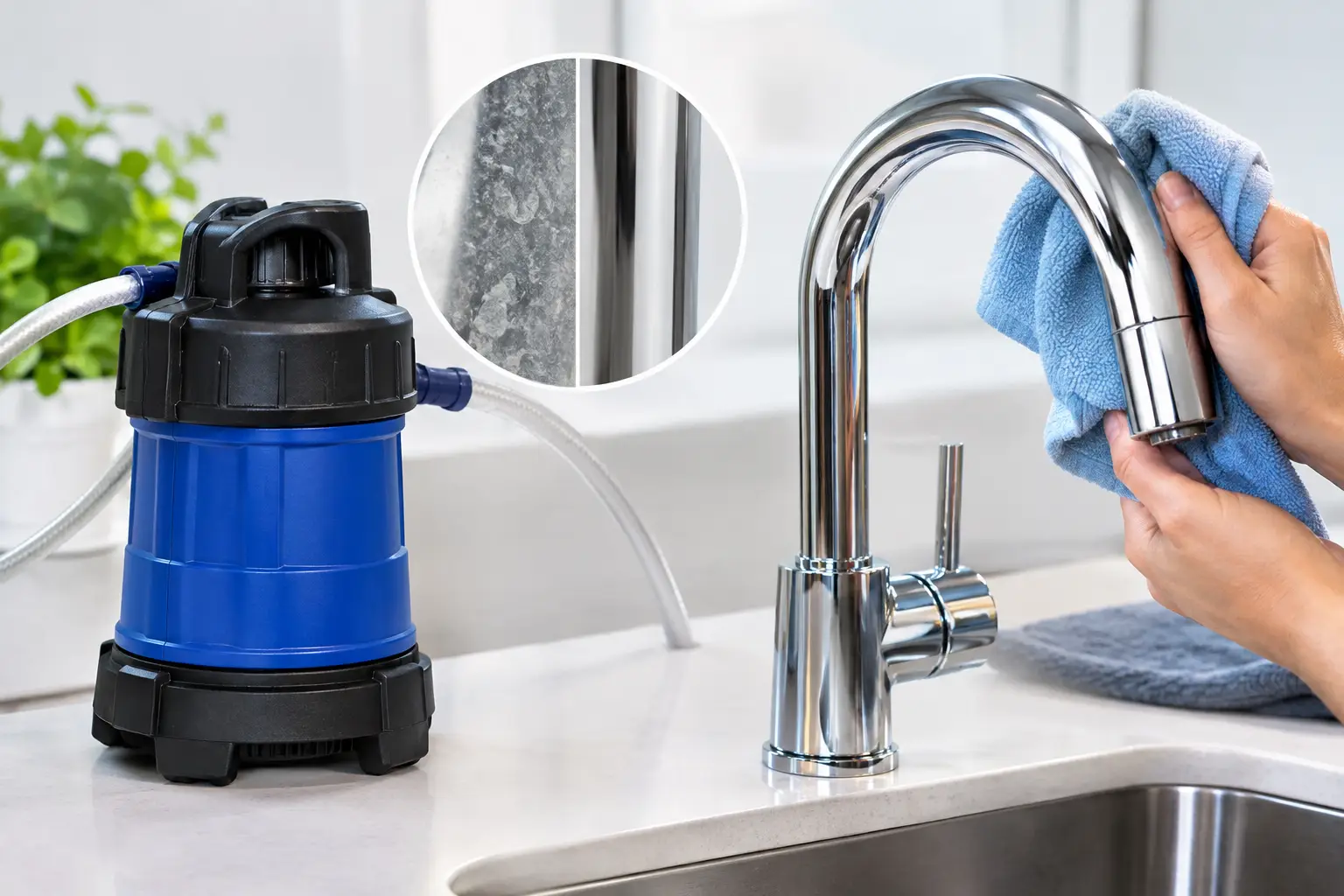
Hard water contains dissolved calcium and magnesium. Those minerals are responsible for white spots after a washdown, crusty deposits around fixtures, scale in plumbing, and soap that does not rinse or lather as well as it should. A water softener removes calcium and magnesium through ion exchange. The result is soft water that rinses cleaner and greatly reduces mineral spotting and scale buildup.
Reverse osmosis, often called RO, works differently. It pushes water through a specialized membrane that rejects a wide range of dissolved contaminants. Depending on the system and feed water, RO can reduce minerals, salts, and other dissolved material. It is commonly used as a point-of-use drinking water treatment method or as part of a larger water-making setup.
The practical distinction is simple: a softener is designed to fight hardness, while RO is designed to produce highly purified water. If hard-water spots and scale are your daily problem, a softener directly targets the cause. If your priority is drinking-water quality or removing dissolved salts, RO may have a role.
What a Water Softener Does Best
For mobile owners, soft water has a visible payoff. It helps washdown water sheet and rinse more cleanly, which means less time chasing spots after the sun comes out. On a boat, that matters on painted surfaces, gelcoat, chrome, glass, clear vinyl, deck hardware, and other finishes that are expensive to maintain or replace.
Soft water also protects what cannot always be seen. Calcium and magnesium can accumulate inside hoses, faucets, showerheads, water heaters, ice makers, and onboard appliances. That buildup can restrict flow, reduce efficiency, and create maintenance issues over time. Treating wash and onboard service water before it reaches those components helps reduce the mineral load that causes scale.
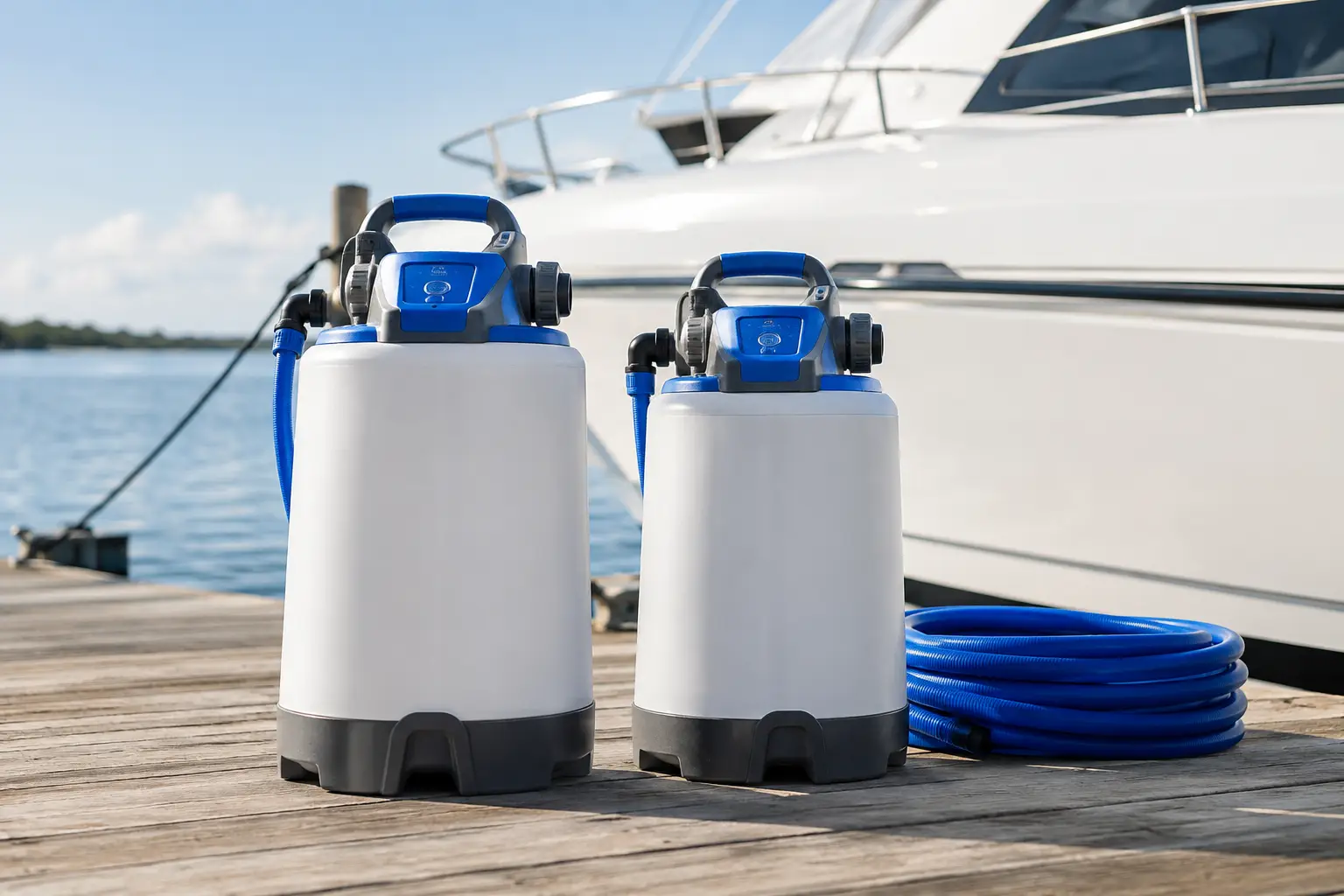
A portable softener is especially practical at docks, marinas, RV parks, and job sites where water quality varies. It can be connected when needed, moved easily, and recharged manually after its softening capacity is used. There is no electrical hookup required, and a properly sized portable unit maintains normal water pressure for routine washdown and use.
For boats, RVs, collector vehicles, and aircraft, that combination matters. The goal is not to build a complicated treatment plant. The goal is to get dependable soft water where you need it, protect valuable surfaces and equipment, and make cleanup easier.
What Reverse Osmosis Does Best
RO has a different purpose and different operating demands. A typical RO system needs pressure to move water across its membrane and creates a separate reject-water stream that carries away concentrated dissolved material. It also relies on filters and membranes that need periodic service. For a fixed home installation, those trade-offs may be entirely reasonable.
On a boat, an RO water maker can be valuable when access to fresh water is limited and the system is specifically designed to make usable water from an appropriate source. For drinking-water applications, a smaller RO unit can also provide purified water at a dedicated faucet. These are legitimate uses when purified water, reduced dissolved solids, or water production is the priority.
But RO is usually not the practical first answer for rinsing an entire vessel after every outing. It may require more installation, more maintenance, electrical power or a dedicated pumping arrangement, and it can waste some feed water as part of the purification process. Using RO water for large-volume washdowns can also be unnecessarily costly and slow when hardness is the actual issue.
Why Soft Water Is Usually the Better Washdown Choice
When your problem is water spots, dulling residue, or lime scale, you need to remove hardness minerals before water touches the surface. A water softener does exactly that. It gives you a consistent source of softened water for washing, rinsing, cleaning, and helping protect plumbing and appliances.
This is especially useful in areas with inconsistent dock or campground water. One marina may have relatively soft municipal water, while the next may draw from a very hard source. You may not know the mineral content until spots are already visible. A portable softener gives you control over the water used on your asset regardless of the location.
There is also a labor benefit. Soft water helps soap work more effectively and leaves less mineral residue behind, so routine cleanup becomes easier. That does not mean you can skip proper washing practices, drying, or protective coatings. It means the water itself is no longer working against you.
For a boat owner, fewer spots can mean less polishing and fewer aggressive cleaners. For an RV owner, it can mean cleaner windows, fewer deposits in the shower, and less buildup in fixtures. For vehicle and aircraft care, it supports a cleaner rinse and helps preserve the finish work that reflects the value of the asset.
Can You Use Both Systems?
Yes, but only when there is a clear reason. A softener and an RO system can serve complementary roles. For example, a boat or RV owner may use softened water for washdowns, showers, fixtures, and general onboard use, while reserving RO-treated water for a drinking-water faucet or another specific need.
In many setups, softened water can also be useful ahead of RO equipment because reducing hardness can help limit scale stress on downstream components. The exact arrangement depends on the source water, the RO system design, available space, and the intended use. It is worth following the equipment manufacturer’s requirements rather than assuming every system should be connected the same way.
What you should not do is treat RO as a universal replacement for a softener. RO may reduce hardness as part of broad purification, but that does not make it the most efficient, portable, or practical solution for high-volume exterior cleaning. Likewise, a softener does not remove every dissolved substance and should not be presented as a substitute for RO when purified drinking water is the goal.
Choosing the Right System for Your Asset
Start with the problem you are trying to solve. If your boat comes back from a washdown covered in spots, your showerheads collect white deposits, or your onboard appliances are exposed to hard water, choose a water softener. Its purpose is straightforward: remove calcium and magnesium, reduce scale, and help protect surfaces and equipment.
If you are concerned about the quality of drinking water, need to lower dissolved solids for a dedicated use, or need a specialized water-making system, investigate RO. Be prepared for a more involved system with filtration, membrane maintenance, water pressure requirements, and reject water management.
Portability should also drive the decision. Fixed treatment equipment makes sense when you have permanent space, reliable power, and a defined plumbing setup. Mobile owners need equipment that can travel, connect quickly, and perform without adding another major onboard project. A rugged portable softener is built for that reality.
Capacity matters as well. A small unit may work for occasional vehicle washing, while a larger boat with frequent washdowns needs more resin capacity before recharge. Select a system based on vessel size, water use, and how often you expect to treat hard water. A correctly sized unit saves time and makes the maintenance routine more predictable.
The Practical Answer for Most Washdowns
For protecting gelcoat, metal, glass, clear vinyl, plumbing, and onboard appliances from hard-water damage, a portable water softener is usually the direct answer. Wet Spot systems are designed for this job: durable, marine-grade portable softening without electrical hookup, pressure loss, or complicated installation. When the unit needs service, it can be manually recharged and put back to work.
Reverse osmosis remains valuable when pure drinking water or specialized water production is the objective. But for the routine work of preventing spots, fighting scale, and making washdowns easier, soft water is the more practical tool. Treat the water for the problem you actually have, and your next cleanup can protect your asset instead of adding to its maintenance burden.