A soft water unit that runs out halfway through a washdown creates the same frustration as hard water: spots on the glass, residue on the gelcoat, and more work before you can put the hose away. The right water softener capacity gives you enough softened water for the way you actually use your boat, RV, vehicle, or aircraft without carrying more equipment than necessary.
Capacity is not just a vessel-size number. It is the working relationship between the hardness of your source water, the amount of water you use, and how often you are willing to recharge the unit. Get that relationship right, and soft water becomes a dependable part of routine maintenance instead of another item to manage.
What Water Softener Capacity Actually Means
Water softener capacity is the amount of hardness minerals a unit can remove before its resin needs to be regenerated, or recharged. Hard water contains dissolved calcium and magnesium. Those minerals are responsible for white spots, chalky scale, restricted fixtures, dull finishes, and the crust that builds up where water dries or sits.
A portable softener uses resin beads to exchange those hardness minerals for sodium ions. As water moves through the unit, the resin captures calcium and magnesium. Eventually, the resin becomes saturated. Recharging with salt restores the resin so the system can keep producing soft water.
That means capacity is not best measured only by the physical size of the tank. A larger vessel generally holds more resin and provides more soft water between recharges, but incoming water conditions matter just as much. A unit will process considerably more water from a moderately hard marina supply than from an extremely hard well-water source.
For owners, the practical question is simple: how much spot-free, scale-reducing water can you count on before it is time to recharge?
Why Source Water Hardness Changes Everything
Two boat owners can use the same softener and have very different recharge schedules. One may be connected to municipal water with moderate hardness. The other may fill from a marina, campground, or private source with much higher mineral content. The second owner will use the softener’s capacity faster because every gallon carries more calcium and magnesium.
This is why choosing solely by a general label such as “small” or “large” can lead to disappointment. A smaller unit may be plenty for a compact boat that gets quick freshwater rinses in an area with moderate hardness. That same unit may require frequent recharging when used for full washdowns at a hard-water marina.
If you do not know the hardness of the water you use, start with a simple water hardness test. It gives you a better foundation for sizing and helps explain why spots or scale seem worse at one location than another. Your water source can change when you travel, so treat test results as useful operating information, not a permanent assumption.
Matching Capacity to Your Vessel and Water Use
For mobile applications, vessel size is a useful starting point because it usually reflects exterior surface area, onboard plumbing demand, and typical washdown volume. It is not a substitute for considering your habits, but it provides a practical way to narrow the choices.
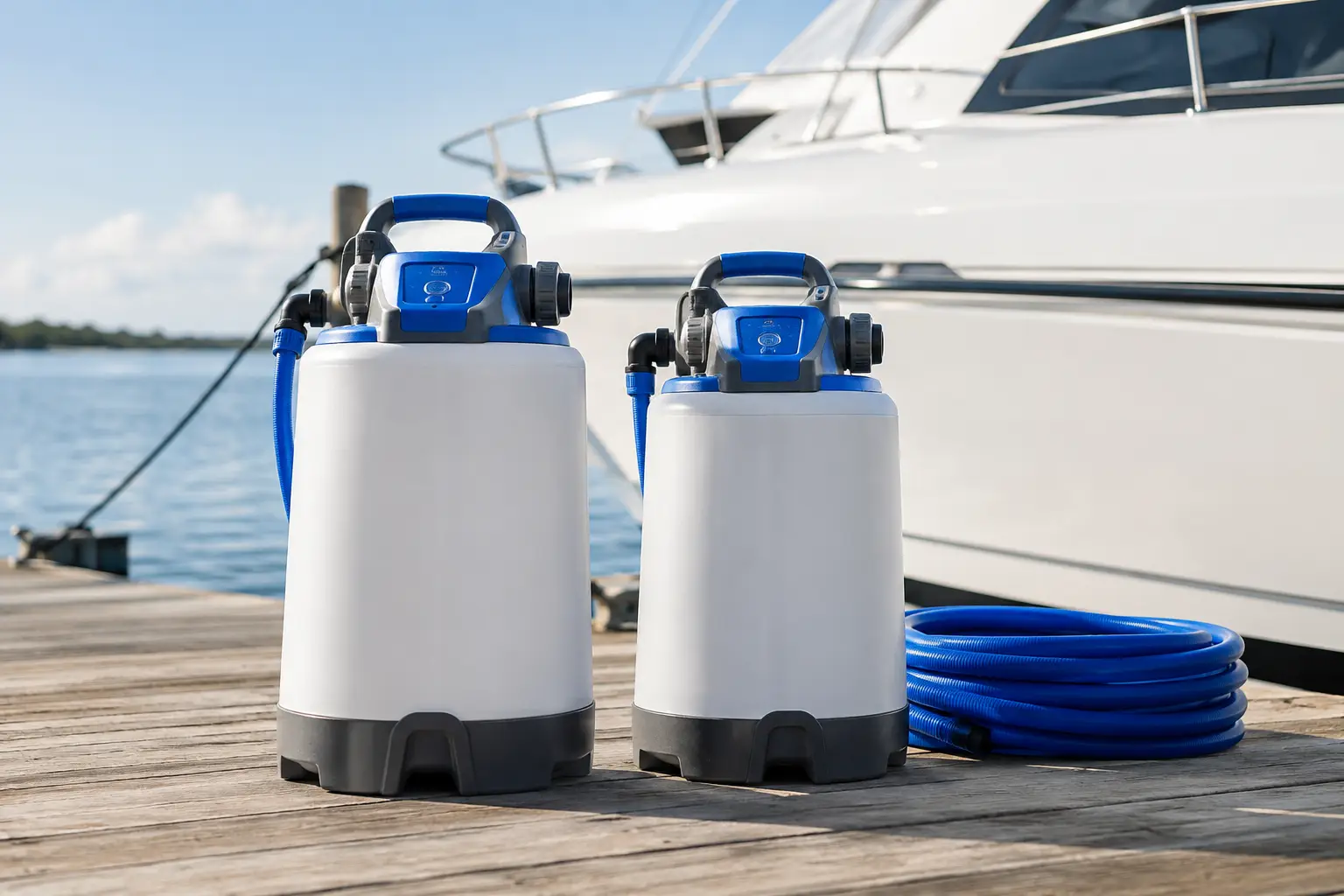
Boats up to 70 feet
Smaller boats commonly need softened water for regular washdowns, window cleaning, rinsing canvas and hardware, and reducing mineral buildup in onboard fixtures. A compact portable unit is often the right fit when storage space is limited and the owner prefers easy transport from dock to boat.
Capacity needs increase if the boat has extensive glass, dark gelcoat, polished metal, or a wash routine that uses generous amounts of water. These surfaces make mineral spotting highly visible. In that case, it may make sense to choose more capacity than the minimum vessel category suggests, particularly when marina water is hard.
Boats from 70 to 100 feet
At this size, washdowns generally involve more deck area, more rails and fittings, larger windows, and more time at the hose. The system may also support greater onboard water use. A mid-range capacity helps reduce interruptions during routine cleaning and avoids turning recharge into a frequent chore.
This is often the best range for owners who want a portable system that can keep pace with regular maintenance while still being manageable to move and store. The goal is not to eliminate recharging altogether. It is to make recharge intervals practical for the way the vessel is maintained.
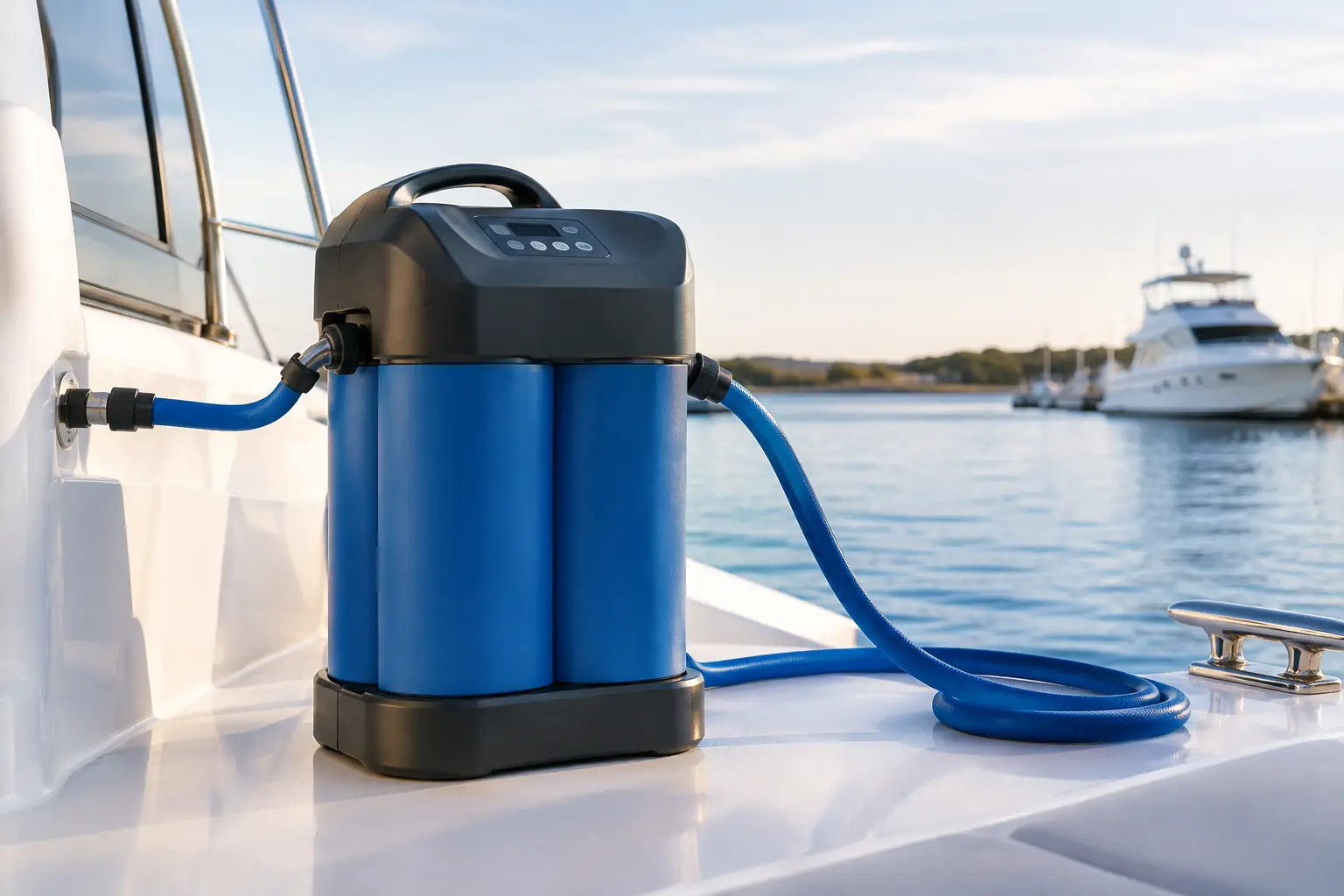
Boats over 100 feet
Larger yachts have more surfaces worth protecting and more systems exposed to mineral buildup. Long washdowns, multiple crew members, frequent rinsing, and greater plumbing demand can consume softened water quickly. Higher capacity is the sensible choice because it provides more operating time between recharges and better supports consistent maintenance standards.
For large vessels, undersizing has a clear cost: more downtime, more manual recharge cycles, and a greater chance that hard water gets used when the softener is exhausted. A larger portable unit is an investment in maintaining finish quality, fixtures, and onboard equipment with fewer interruptions.
Do Not Size Only for Exterior Washdowns
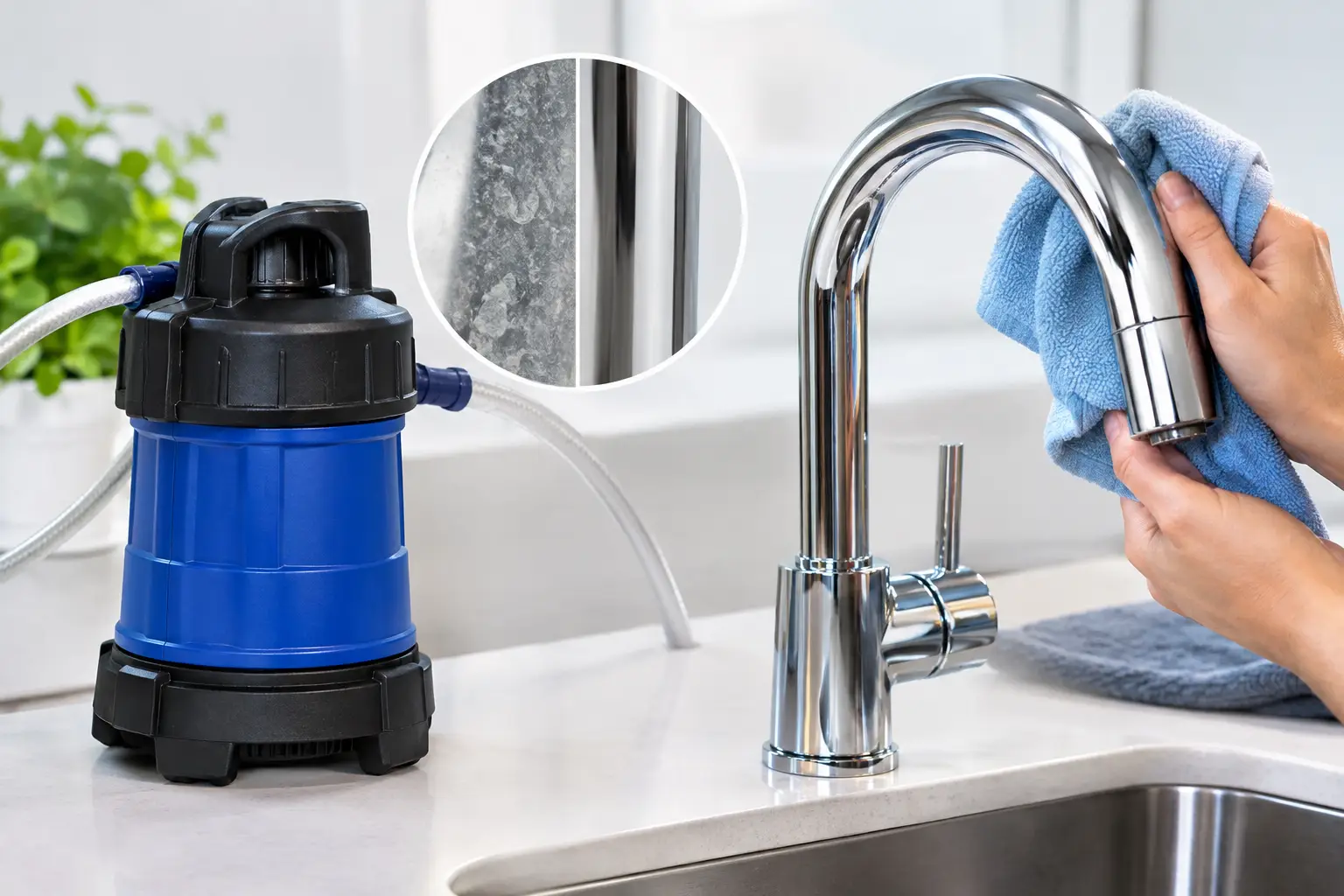
A washdown may be the most visible use for soft water, but it is not the only one. Hard water affects the entire places where it is used. Calcium and magnesium can leave deposits on faucets, shower doors, sinks, hoses, ice makers, water heaters, and other onboard appliances. Soap also performs differently in hard water, often leaving behind residue that takes more rinsing and more effort to remove.
When considering capacity, account for all of the softened water you expect to use. If the unit is dedicated strictly to exterior rinsing, your needs may be straightforward. If it will also supply interior fixtures or protect onboard appliances, plan for a higher demand level.
The same principle applies to RVs, automotive detailing, and aviation use. A single vehicle rinse may require modest capacity. A weekend of RV use, repeated detailing work, or washing multiple assets from one source can justify moving up in size.
Bigger Is Not Always Better
More capacity means more softened water between recharges, but it also means a larger, heavier unit and a greater storage commitment. For some owners, especially those with limited dock-box or locker space, a compact unit that is easy to move and recharge is the better long-term choice.
The right system is the one you will use consistently. A unit that is too large to handle conveniently may sit unused. A unit that is too small may become a maintenance burden. The best balance comes from looking at three factors together: available storage space, expected water use, and local water hardness.
A portable water softener should earn its place onboard by reducing labor, not adding it. That is why manual recharge is a practical design choice. It avoids electrical hookups and complicated installation while allowing the owner to restore performance when needed.
Signs Your Current Capacity Is Too Small
Frequent recharging is the most obvious sign, but it is not the only one. If you notice water spots returning sooner than expected, scale beginning to form around fixtures, or soap failing to rinse cleanly, the resin may be exhausted. Hard-water performance can return gradually, so it helps to watch the results rather than waiting for a complete failure.
You may also be undersized if you regularly avoid using softened water because you are trying to save capacity for a bigger job. A properly sized unit should support normal washdowns and routine care without forcing you to ration water every time you connect a hose.
Before assuming the tank is too small, confirm that the unit has been recharged correctly and that the incoming water conditions have not changed. A move to a harder-water marina can shorten service time even when your usage stays the same.
Get More Useful Capacity From Every Recharge
Capacity is partly about equipment size, but good operating habits matter. Recharge the system according to its instructions instead of waiting until hard-water symptoms become obvious. Keep the unit protected during transport, use clean connections, and avoid leaving it where it can be damaged by impact or freezing conditions.
Use softened water where it delivers the greatest return. Final rinses on gelcoat, glass, stainless, painted surfaces, clear vinyl, and polished hardware are especially valuable because they reduce spotting and the need for hand drying. For onboard plumbing and appliances, consistent soft water helps reduce the mineral accumulation that can create expensive maintenance problems over time.
Wet Spot portable systems are built for this kind of practical ownership: no electrical hookup, no loss of water pressure, and straightforward manual recharge when the resin needs to be restored.
Choose capacity based on your real water, your real wash routine, and the assets you want to protect. When your softener keeps up with the job, clean water stops leaving evidence behind.